Foundational Scripture References
Exodus 18:13–24; Numbers 20:7–12; Matthew 20:25–28; John 13:1–17; 1 Corinthians 4:1–5; James 3:1; 1 Peter 5:1–4.
The Calling Is Not the Crown

There is a danger that can quietly enter the heart of a person who has been entrusted with leadership. It does not always begin with rebellion, dishonesty, or an obvious desire for power. Sometimes it begins with a genuine calling, a sincere desire to serve God, and a willingness to accept responsibilities that others may not be prepared to carry. The person begins by wanting to help, teach, guide, encourage, and make a difference. Over time, however, the responsibility itself can become so important that the person begins to identify more strongly with the position than with the purpose for which the position was given.
What once felt like a responsibility begins to feel like a personal possession. What once required prayer becomes something the leader assumes he or she understands without seeking further direction. What once demanded humility becomes a source of identity, recognition, and influence. The person may still speak about serving God, yet the heart can gradually become more concerned with preserving the position than fulfilling the purpose.
This is one of the reasons leadership requires continual self examination. A calling does not remove the possibility of pride. Experience does not eliminate the need for correction. Spiritual gifts do not guarantee spiritual maturity, and public influence does not prove that a person’s private life is in order. The more responsibility a person receives, the more important it becomes to remain attentive to the condition of the heart.
The word mantle is often used to describe a calling, responsibility, or assignment entrusted to a person. In this chapter, the mantle represents that responsibility, while the Master is Jesus Christ, the One to whom all faithful service must remain submitted. The distinction matters because the assignment was never intended to become greater than the One who gave it. A leader may be entrusted with influence, but that influence is not independent of God. A person may be given responsibility over a ministry, but the ministry does not become a private kingdom.
Matthew 20:25 to 2825 But Jesus called them unto him, and said, Ye know that the princes of the Gentiles exercise dominion over them, and they that are great exercise authority upon them. 26 But it shall not be so among you: but whosoever will be great among you, let him be your minister; 27 And whosoever will be chief among you, let him be your servant: 28 Even as the Son of man came not to be ministered unto, but to minister, and to give his life a ransom for many.
Matthew 20:25 to 28 establishes a fundamental principle for leadership among the people of God. Jesus challenged the pattern of leadership that seeks greatness through domination and established service as the defining posture of those who would lead under His authority. This does not mean that leaders should avoid making decisions, providing direction, or correcting harmful conduct. It means that every exercise of authority must be governed by the purpose of serving what is right rather than elevating the person who holds the position.
A calling is not a crown to wear above other people. It is a responsibility to carry before God. When leaders understand this, they become less concerned with protecting their image and more concerned with fulfilling their assignment faithfully. They recognize that the purpose of leadership is not to make others dependent upon them, but to help people grow in truth, responsibility, and maturity.
The question every leader must continually ask is not simply whether the ministry is growing, whether people are attending, or whether the work is receiving recognition. The deeper question is whether the work is being carried out in a way that honors Jesus Christ. Success cannot be measured only by numbers, visibility, or influence. Faithfulness must also be measured by integrity, humility, the treatment of people, and a willingness to remain accountable to God’s truth.
Stewardship, Not Ownership

First Corinthians 4:1 to 51 Let a man so account of us, as of the ministers of Christ, and stewards of the mysteries of God. 2 Moreover it is required in stewards, that a man be found faithful. 3 But with me it is a very small thing that I should be judged of you, or of man’s judgment: yea, I judge not mine own self. 4 For I know nothing by myself; yet am I not hereby justified: but he that judgeth me is the Lord. 5 Therefore judge nothing before the time, until the Lord come, who both will bring to light the hidden things of darkness, and will make manifest the counsels of the hearts: and then shall every man have praise of God.
First Corinthians 4:1 to 5 presents the language of stewardship and faithfulness. A steward is entrusted with something that belongs to another. The responsibility is real, but the ownership remains with the one to whom the steward must ultimately answer. This principle provides a necessary foundation for understanding spiritual leadership.
A pastor may be entrusted with the care of a congregation, but the congregation does not belong to the pastor. A teacher may be entrusted with instructing students, but the students do not exist to protect the teacher’s ego. A ministry leader may be responsible for organizing a team, but the team is not a personal possession. Parents are entrusted with the care and development of their children, but that responsibility does not give them permission to disregard the dignity, safety, or developing independence of those children.
The same principle applies wherever people are entrusted with influence over others. Responsibility establishes an obligation to act faithfully. It does not establish an unlimited right to control.
When stewardship is understood correctly, a leader recognizes that the people affected by decisions are not merely resources to accomplish a personal vision. They are human beings whose lives, gifts, responsibilities, and relationship with God deserve respect. Their questions should not automatically be treated as threats, and their growth should not be viewed as competition. A healthy leader desires to see others become capable, mature, and responsible rather than permanently dependent upon the leader’s approval.
Ownership thinking produces a very different atmosphere. A leader may begin to believe that disagreement is disloyalty, that questions undermine the ministry, or that people who leave a position have betrayed the person who appointed them. The leader may use past sacrifices as a reason to demand ongoing allegiance or suggest that questioning a decision is equivalent to questioning God. In this environment, the purpose of leadership becomes increasingly entangled with the preservation of personal authority.
Stewardship asks a different set of questions. Is the responsibility being carried out faithfully? Are people being treated with dignity? Are decisions consistent with the principles of Scripture? Is there room for appropriate correction? Are resources being handled honestly? Is the leader willing to acknowledge mistakes and make necessary changes? These questions direct attention away from the leader’s status and toward the responsibility itself.
A steward must also understand that accountability is not an insult to the calling. Accountability is part of the calling. If a person has been entrusted with something valuable, there must be a willingness to answer for how it is handled. A leader who insists upon accountability from everyone else while refusing to be examined has misunderstood the nature of stewardship.
The mantle does not make a person the master of the people being served. It makes that person responsible for how the assignment is carried out. Jesus Christ remains the Master, and every faithful act of leadership must be measured against His truth.
The Character Behind the Calling
A person’s gifts may create opportunities for leadership, but character determines how those opportunities are handled. A gifted speaker can communicate compellingly while lacking patience. A talented organizer can build an effective ministry while struggling to receive correction. A person may possess strong leadership abilities and still need to grow in humility, honesty, self control, and compassion.
This is why we must never confuse visible ability with spiritual maturity. Gifts may be evident before character has been fully developed. Opportunity may arrive before a person has learned to handle influence wisely. Recognition may increase before the individual has established the habits of accountability necessary to carry greater responsibility. When the development of character is neglected, success can magnify weaknesses that were previously less visible.
The danger is not that a leader possesses gifts or receives recognition. These things can be used for good. The danger emerges when the leader begins to believe that the gifts themselves prove personal superiority or excuse weaknesses that require correction. A person who can teach effectively may begin to believe that no one should question the teaching. Someone who has served faithfully for many years may assume that past faithfulness makes present accountability unnecessary.
Yet spiritual maturity is not demonstrated by the absence of correction. It is demonstrated by the willingness to respond to correction with honesty and humility. A leader who acknowledges a mistake and takes appropriate steps to address it may demonstrate greater integrity than someone who protects an appearance of perfection through denial.
James 3:11 My brethren, be not many masters, knowing that we shall receive the greater condemnation.
James 3:1 emphasizes the seriousness of teaching responsibility. Those who teach carry a particular obligation because their words can influence what others believe and how they live. Teaching is not merely an opportunity to speak. It is a responsibility to handle truth carefully, communicate accurately, and recognize the effect that instruction may have upon others.
The person who teaches should therefore remain a student of the Word. The person who leads should remain willing to learn. The person who corrects others should remain open to being corrected. These are not signs of weakness. They are safeguards against the pride that can develop when influence becomes familiar.
Character is often revealed most clearly in moments that offer no public reward. How does a leader treat someone who cannot advance the ministry? How does the leader respond when a decision is challenged respectfully? What happens when an apology is necessary? Does the leader speak honestly when dishonesty would protect a reputation? Is kindness extended only to people who agree, contribute, or offer recognition?
These questions reveal why leadership cannot be evaluated solely from a platform. Public ministry may show one part of a person’s life, but faithful leadership also requires integrity in private decisions, ordinary conversations, financial responsibilities, and difficult relationships.
No leader will demonstrate perfection in every circumstance. The expectation is not that leaders never fail, but that they remain accountable, repent when necessary, and pursue the character that their responsibility requires. A calling may open the door, but humility and integrity are essential to carrying the responsibility faithfully.
Jesus Christ, the Pattern of a Servant
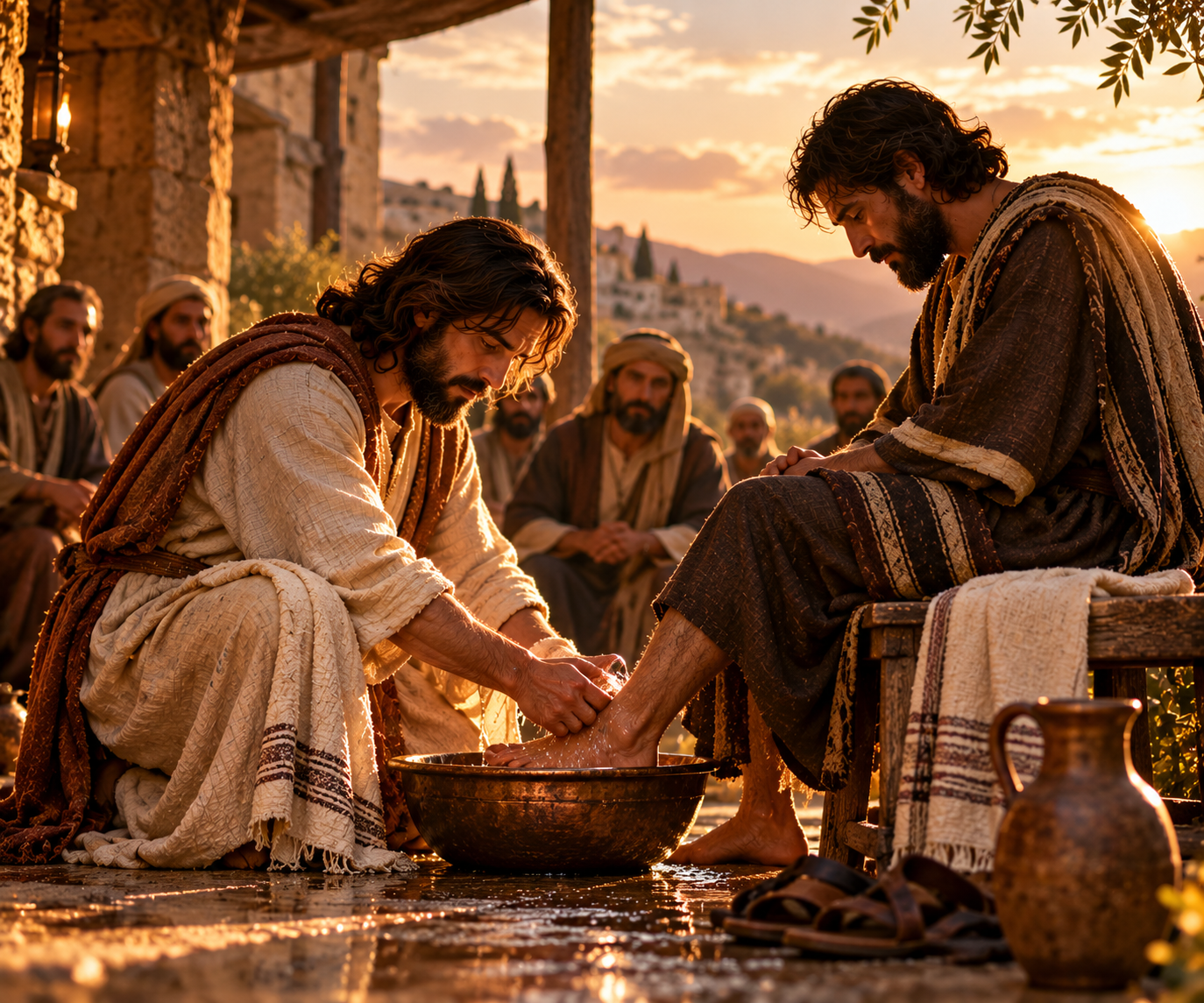
John 13:1 to 171 Now before the feast of the passover, when Jesus knew that his hour was come that he should depart out of this world unto the Father, having loved his own which were in the world, he loved them unto the end. 2 And supper being ended, the devil having now put into the heart of Judas Iscariot, Simon’s son, to betray him; 3 Jesus knowing that the Father had given all things into his hands, and that he was come from God, and went to God; 4 He riseth from supper, and laid aside his garments; and took a towel, and girded himself. 5 After that he poureth water into a bason, and began to wash the disciples’ feet, and to wipe them with the towel wherewith he was girded. 6 Then cometh he to Simon Peter: and Peter saith unto him, Lord, dost thou wash my feet? 7 Jesus answered and said unto him, What I do thou knowest not now; but thou shalt know hereafter. 8 Peter saith unto him, Thou shalt never wash my feet. Jesus answered him, If I wash thee not, thou hast no part with me. 9 Simon Peter saith unto him, Lord, not my feet only, but also my hands and my head. 10 Jesus saith to him, He that is washed needeth not save to wash his feet, but is clean every whit: and ye are clean, but not all. 11 For he knew who should betray him; therefore said he, Ye are not all clean. 12 So after he had washed their feet, and had taken his garments, and was set down again, he said unto them, Know ye what I have done to you? 13 Ye call me Master and Lord: and ye say well; for so I am. 14 If I then, your Lord and Master, have washed your feet; ye also ought to wash one another’s feet. 15 For I have given you an example, that ye should do as I have done to you. 16 Verily, verily, I say unto you, The servant is not greater than his lord; neither he that is sent greater than he that sent him. 17 If ye know these things, happy are ye if ye do them.
John 13:1 to 17 records Jesus washing the feet of His disciples. The act was deeply significant because it demonstrated a form of leadership that refused to rely upon status as a reason to avoid humble service. Jesus understood His authority, yet He used the moment to teach His disciples about the character expected of those who would follow His example.
The lesson was not that leadership has no distinctions or that every responsibility must be exercised in precisely the same way. The lesson was that no legitimate responsibility makes a person too important to serve. A leader who believes that certain forms of service are beneath the dignity of the position has misunderstood the heart of the Master.
Service is not limited to visible acts of kindness. It includes listening carefully when someone raises a concern, taking responsibility for a difficult decision, making sure that vulnerable people are protected, and addressing problems even when doing so is inconvenient. It includes recognizing when a person needs support rather than condemnation and when a firm boundary is necessary rather than another promise that nothing will change.
Servant leadership does not mean pleasing everyone. Sometimes a leader must make a difficult decision, address misconduct, or establish a boundary that others do not welcome. The difference lies in the purpose and manner of the decision. Is the leader acting to fulfill a legitimate responsibility, or to protect personal pride? Is the correction proportionate and truthful, or is it designed to shame and control? Is the decision open to appropriate examination, or is it being defended simply because the leader made it?
The example of Jesus calls leaders to examine the heart behind their actions. It is possible to perform an outward act of service while inwardly seeking recognition. It is possible to speak about humility while expecting special treatment. It is possible to use the language of sacrifice to remind others how much they owe us. Genuine service, however, does not turn good works into a debt that others must repay through unquestioning loyalty.
A leader may sacrifice time, energy, comfort, and personal resources for a ministry. Such sacrifices can be meaningful and worthy of appreciation. Yet sacrifice does not create ownership over the people who benefit from it. Nor does it authorize the leader to disregard accountability. Faithful service is offered as a responsibility before God, not as a permanent claim upon another person’s conscience.
Jesus Christ remains the pattern by which spiritual leadership must be examined. His example does not encourage leaders to abandon their responsibilities. It teaches them to carry those responsibilities without allowing pride to corrupt their purpose. The mantle must never become an excuse to place oneself above the people whom the assignment is intended to serve.
When Responsibility Becomes Personal Power
Power is not always expressed through obvious threats or public displays of dominance. Sometimes it appears through the subtle expectation that one person’s preferences must always prevail. It may develop when a leader becomes accustomed to having the final word and gradually loses the ability to distinguish between a legitimate decision and a personal demand.
The first signs may appear harmless. A leader may become impatient when questioned, dismiss suggestions without consideration, or interpret disagreement as a lack of commitment. Over time, those responses may establish an atmosphere in which people learn that honest communication carries a cost. They may stop raising concerns, conceal mistakes, or agree publicly while privately losing confidence in the leadership.
When this pattern continues, the leader may interpret the resulting silence as proof of unity. Yet silence does not always indicate agreement, and compliance does not necessarily indicate trust. People may remain quiet because they are afraid of losing relationships, responsibilities, financial support, community, or a sense of belonging. If a leader depends upon that fear to maintain authority, the relationship has moved away from healthy stewardship.
A person entrusted with leadership must be willing to examine whether others are cooperating freely and responsibly or merely attempting to avoid punishment. This does not mean that every uncomfortable consequence is evidence of control. Legitimate responsibilities may include expectations, boundaries, and consequences for misconduct. The question is whether those expectations are reasonable, consistently applied, and connected to the responsibility itself, rather than used to protect the leader from challenge.
Personal power becomes especially dangerous when a leader begins to treat personal preferences as divine instructions. A decision about a ministry schedule, a preferred method of operation, or an organizational practice may be presented as though disagreement would constitute disobedience to God. This can prevent people from recognizing that the issue is actually a matter of judgment, administration, or preference rather than a direct command of Scripture.
Leaders should be honest about the difference between what God’s Word clearly teaches and what they personally believe would be the wisest course of action. There is room for conviction, experience, and practical judgment in leadership, but those things should not be misrepresented as unquestionable divine direction. A leader can explain a decision firmly without claiming that God has personally condemned everyone who sees the matter differently.
The misuse of authority can also occur when a leader expects access to personal information that is not reasonably necessary for the responsibility being carried out. Spiritual guidance does not give a leader unlimited access to another person’s private life, relationships, finances, or personal decisions. Appropriate confidentiality and boundaries are essential, and the sharing of sensitive information should not become a tool for control.
A mantle is intended to help a person fulfill a responsibility. It must never become a means of making other people smaller so that the leader can feel greater. When influence begins to depend upon fear, secrecy, intimidation, or unquestioning loyalty, the purpose of leadership requires serious examination.
The Danger of Neglecting Accountability
A leader who is unwilling to be corrected may gradually become isolated from the very truth that could protect the ministry. If every concern is interpreted as an attack, every disagreement is treated as rebellion, and every correction is dismissed as jealousy, the leader removes important opportunities for self examination.
No individual has complete knowledge of every situation. Leaders may misunderstand a person’s intentions, overlook the consequences of a decision, or fail to recognize how their behavior affects those around them. Honest accountability creates an opportunity to discover these limitations and address them before they produce greater harm.
Accountability must be more than a statement in a handbook or a promise made during a leadership meeting. It requires meaningful procedures, trustworthy people who can examine concerns fairly, and a willingness to act when evidence establishes that correction is necessary. A system in which the same person controls every decision, investigates every complaint, and determines every consequence may lack the independence necessary for genuine accountability.
This is particularly important when concerns involve a leader’s personal conduct. If the leader has the power to silence the person raising the concern, determine whether the concern will be investigated, and decide what consequences will follow, the process may become more concerned with protecting authority than establishing truth. Appropriate independent oversight can help ensure that serious concerns are not dismissed simply because of the position held by the person involved.
Accountability should also be proportionate. An honest mistake should not automatically be treated as intentional misconduct, and an unverified accusation should not be accepted as established fact. A fair process considers the evidence, listens carefully, protects people from retaliation, and allows appropriate opportunities for response. The goal is to establish what happened and determine the responsible next steps.
When wrongdoing is established, repentance must involve more than regret that the situation became public. A meaningful response acknowledges the conduct, recognizes its effect, accepts appropriate consequences, and takes practical steps to prevent repetition. Depending on the seriousness of the conduct, restoration may require outside oversight, changes in responsibility, professional assistance, or removal from a position. Forgiveness does not eliminate the need for these safeguards.
A leader’s willingness to accept accountability is an important part of faithful stewardship. It demonstrates recognition that the assignment is not a personal possession and that the standards of God’s truth apply to the leader as fully as they apply to everyone else.
The Responsibility to Protect Those in Your Care

Leadership carries a responsibility to consider the people who may be affected by its decisions. This includes protecting those who are vulnerable, responding appropriately to concerns, and refusing to allow the reputation of an organization to become more important than the safety and dignity of the people within it.
In spiritual communities, people may disclose painful experiences, personal struggles, family problems, or concerns about another person’s conduct because they trust those receiving the information. That trust must be handled with care. Confidentiality should be respected where appropriate, but it should never be used to conceal abuse, exploitation, or an immediate threat to safety.
A leader should not promise absolute secrecy when circumstances may require appropriate reporting or protective action. Instead, the leader should communicate honestly about the limits of confidentiality and seek guidance when a concern involves serious harm. Depending on the situation, this may require contacting safeguarding professionals, civil authorities, or other appropriate organizations. Spiritual authority does not replace the responsibility to comply with applicable reporting requirements or protect people from danger.
Leaders must also recognize that the person raising a concern may be afraid. The individual may worry about being disbelieved, losing a place in the community, or being accused of damaging the ministry. A responsible response listens without rushing to judgment, takes the concern seriously, and avoids punishing the person for speaking. At the same time, fairness requires that the facts be examined carefully rather than assuming guilt or innocence solely on the basis of someone’s position or reputation.
The protection of people should never be reduced to a public statement about caring. It must be reflected in decisions, procedures, and actions. If a leader speaks about love but repeatedly dismisses credible concerns, the gap between the message and the conduct must be addressed. If an organization claims to value accountability but allows influential individuals to avoid consequences, its practices must be examined honestly.
This responsibility extends beyond responding to serious misconduct. Leaders should create environments where people can ask questions, seek guidance, acknowledge mistakes, and develop their abilities without being humiliated. Correction should be directed toward truth and growth rather than personal domination. Boundaries should be established clearly, and expectations should be communicated fairly.
A faithful leader does not guarantee that no one will ever be hurt or disappointed. Human relationships are imperfect, and difficult decisions cannot always be avoided. Faithful leadership does, however, require a willingness to take concerns seriously, respond to harm responsibly, and correct failures rather than conceal them.
The mantle is not a shield from responsibility. It is a reminder of the responsibility that has been entrusted to the person who carries it.
When the Mantle Becomes an Identity
A leader may begin to define personal worth through the position held. Recognition becomes evidence of success, access becomes evidence of importance, and the ability to influence decisions becomes a source of security. The person may struggle to imagine life without the role because the role has become inseparable from the person’s sense of identity.
This attachment can make correction especially painful. A concern about a decision may be interpreted as a rejection of the leader’s entire calling. A change in responsibility may feel like a loss of personal value. Another person’s growth or success may be experienced as competition rather than celebrated as a blessing.
When identity becomes dependent upon position, the leader may begin protecting the role at the expense of the assignment. The person may resist developing others, refuse to delegate meaningful responsibilities, or discourage capable individuals from exercising their gifts. The ministry may become increasingly dependent upon one personality because the leader is afraid of becoming less necessary.
Yet faithful leadership should not require the permanent dependence of others. A healthy leader seeks to prepare people to carry responsibilities wisely, make sound decisions, and contribute meaningfully. The growth of others is not a threat to a genuine calling. It is often evidence that leadership is fulfilling its purpose.
There may also be seasons when a person is required to release a position, accept a different assignment, or step away because personal circumstances have changed. Such transitions can be difficult, particularly when years of sacrifice and service have been invested in the work. However, a change in position does not erase a person’s value before God. A title can change without changing the worth of the individual.
Leaders should therefore cultivate a life of faithfulness that extends beyond public responsibilities. Prayer, personal integrity, relationships, family responsibilities, and a willingness to serve without recognition all help prevent a position from becoming the foundation of identity. A person who knows that worth is not dependent upon a title can lead more freely, receive correction more honestly, and release responsibility when necessary.
The Master remains the same even when the assignment changes. Our responsibility is to remain faithful to Jesus Christ, whether we are leading publicly, serving quietly, preparing others, or learning through a season in which we are no longer in the position we once held.
A mantle can be entrusted for a season, but it must never become the measure of a person’s worth. The leader belongs to Jesus Christ before, during, and after the assignment.
The Courage to Be Corrected

Correction is one of the clearest tests of a leader’s humility. It is relatively easy to speak about accountability when the discussion concerns someone else’s behavior. It is more difficult when the concern involves a decision we made, a statement we delivered, or an attitude we have defended.
A leader who genuinely desires to honor God must remain willing to examine credible concerns. This does not require accepting every accusation as true or allowing every critic to determine the direction of the ministry. It requires a willingness to listen carefully, consider the evidence, seek wise counsel, and acknowledge the truth when correction is necessary.
The first response to criticism can reveal much about the heart. Some concerns may be expressed unfairly, and some may be based on incomplete information. Even then, the leader can respond without humiliation, threats, or immediate retaliation. A measured response creates room to establish the facts and distinguish a legitimate concern from a misunderstanding.
When a leader has made a mistake, a clear acknowledgment is often more valuable than a lengthy defense. An apology should identify what was wrong, recognize the effect of the conduct, and explain what will be done to address the problem. It should not be used to shift blame, demand immediate forgiveness, or pressure those affected to restore trust before they are ready.
Repentance also requires action. If a decision caused harm, the leader should consider what repair is possible. If a process failed, the process should be reviewed. If inappropriate behavior has become a pattern, meaningful safeguards and consequences may be necessary. A promise to change is important, but the credibility of that promise is strengthened by consistent behavior over time.
There are circumstances in which a leader may need to step aside from a responsibility while a serious concern is examined. Such a step does not automatically establish guilt. It can be a prudent way to protect the integrity of the process and prevent the position from interfering with a fair review. A person’s willingness to cooperate with appropriate procedures can demonstrate respect for the seriousness of the responsibility involved.
The courage to be corrected does not diminish leadership. It protects leadership from becoming captive to pride. A person who can admit a mistake remains capable of growth. A person who refuses every correction risks becoming increasingly isolated, because those around that person eventually learn that honesty is unwelcome.
Faithful leadership is not the performance of perfection. It is the practice of accountability, humility, and continued submission to the truth of Jesus Christ.
Carrying the Mantle Without Losing the Master
The greatest danger in leadership is not simply that a person might make a mistake. Every human being is capable of error. The deeper danger is that a person may become so attached to the responsibility that the person begins to defend the position against the truth that should govern it.
When the mantle becomes the priority, people may be treated as obstacles, correction may be viewed as a threat, and the reputation of the ministry may become more important than the integrity of its work. The leader may continue using spiritual language while becoming less willing to submit personal decisions to the principles of Scripture. The outward structure may remain intact even as the purpose of the responsibility becomes distorted.
This is why every leader must continually return to the Master. The responsibility is not sustained by personality alone, and the work of God cannot be reduced to the preservation of a human reputation. Jesus Christ must remain the foundation, the standard, and the One whose truth determines how the responsibility is carried.
For the person who leads, this means examining motives, receiving correction, respecting appropriate boundaries, and remaining accountable for the effect of decisions. It means recognizing that people are not possessions and that influence must never be used to demand unquestioning loyalty. It means understanding that a faithful ministry is not one in which the leader can never be challenged, but one in which truth is valued more highly than personal pride.
For the person who follows, this means respecting faithful leadership while refusing to treat a human being as the final authority over every decision. It means learning to distinguish biblical instruction from personal preference and recognizing that every believer has a responsibility to grow in discernment. It also means resisting the temptation to use the failures of one leader as a reason to reject all guidance or to become unwilling to receive legitimate correction.
Both positions require humility. The leader must remember that authority is entrusted, not owned. The follower must remember that personal responsibility cannot be transferred entirely to another person. Both must recognize that their decisions affect others and that their conduct remains accountable to God.
There will be moments when leadership requires difficult choices, honest confrontation, or the willingness to acknowledge a failure. There will also be moments when those who follow must ask difficult questions, establish boundaries, or refuse a demand that contradicts the truth. In each circumstance, the goal is not to preserve personal comfort or win a contest of authority. The goal is to remain faithful to Jesus Christ.
The mantle may identify the responsibility, but it does not determine the ultimate authority. The title may describe the position, but it cannot replace the character required to fulfill it. The calling may open the door, but the person who carries it must continue walking in humility, integrity, and truth.
When the mantle is carried with the Master in view, leadership becomes an opportunity to serve rather than a reason to dominate. Authority can be exercised with courage without becoming cruel, and correction can be offered firmly without becoming humiliating. People can be guided without being controlled, and leaders can be respected without being placed beyond accountability.
The question is not simply whether we have been entrusted with a responsibility. The question is whether we are carrying it in a way that honors the One to whom we must answer.