Chapter 16
The Prison of Remembering
Key Scriptures: Philippians 3:13–14; Isaiah 43:18–19; Psalm 147:3; 2 Corinthians 10:4–5; Romans 12:2; John 8:36; Psalm 34:18.
Central Truth
A returning memory does not automatically mean forgiveness has failed. With God’s help, we can acknowledge the past, respond to memories with wisdom, and refuse to let painful experiences govern the present or define the future.
When Yesterday Walks Into Today
There are moments when you believe you have finally turned a corner, when you have prayed, forgiven, surrendered the offense to God, and begun rebuilding the parts of your life that betrayal once threatened to destroy, only to discover that a memory can return without asking permission. A familiar name may cross your mind, a conversation may replay itself while you are driving, a place may remind you of what happened, or a sentence spoken years ago may suddenly feel as sharp as it did the first time you heard it. You may find yourself wondering why you are thinking about it again when you thought you had already given it to God. You may even question whether your forgiveness was genuine because the memory still carries an emotional weight.

But the return of a memory does not automatically mean the return of bondage, and the presence of pain does not necessarily mean that forgiveness has failed. Healing is not always measured by whether you can remember an experience without feeling anything. Sometimes healing is revealed by the way you respond when the memory comes, by the decisions you make afterward, and by whether you allow the past to dictate the direction of your present life.
One of the most painful misconceptions about forgiveness is the belief that a truly forgiven offense should never cross your mind again. That expectation can turn a normal part of healing into another source of condemnation. When the memory returns, you begin judging yourself, questioning your faith, and wondering whether you have somehow disappointed God. Instead of addressing the memory with wisdom and grace, you become frustrated with yourself for still having one.
God has not called you to pretend that your history never happened. He has called you to walk in freedom from the power that history once held over you. There is a difference between remembering what happened and surrendering your present to what happened. You cannot always control which memories appear, but with God’s help, you can learn to respond to them without allowing them to become the governing authority over your thoughts, relationships, decisions, and spiritual life.
The past may be part of your testimony, but it does not have to become the prison in which you spend the rest of your life.
The Memory Is Not the Same as the Master
Some memories remain because an experience mattered deeply. Betrayal can affect your understanding of trust, your sense of safety, your expectations of relationships, and even the way you interpret the intentions of others. When someone you trusted causes significant harm, the mind may continue revisiting the experience in an attempt to understand what happened, recognize warning signs, or protect you from experiencing the same pain again. Remembering is not always a conscious choice, and the appearance of a memory does not mean that you have invited bitterness back into your heart.

However, there is an important distinction between a memory that visits and a memory that governs. A memory visits when you recognize what happened, acknowledge the emotions it brings, and return your attention to the life you are living today. A memory begins to govern when every new relationship is judged by the behavior of the person who hurt you, every disagreement becomes evidence that betrayal is approaching again, and every opportunity is rejected because your past has convinced you that disappointment is inevitable.
The experience may be over, yet the expectation of another injury can continue shaping your choices. You may find yourself preparing defenses against people who have not attacked you, withdrawing from relationships before anyone has had the opportunity to demonstrate their character, or repeatedly rehearsing conversations in which you finally explain your pain to someone who may never be willing to understand it. In those moments, the past is no longer simply something you remember; it has begun influencing how you experience the present.
This is why freedom requires more than telling yourself to forget. You must learn to recognize when an old experience is influencing a present decision and then ask whether that influence is helping you respond wisely or keeping you bound to a former season.
The memory may remain, but its authority can diminish. You can remember the warning signs without assuming that everyone is dangerous, remember the betrayal without living in constant anticipation of another one, and remember the words spoken against you without allowing those words to define your identity. The goal is not to erase your history but to prevent your history from becoming your master.
Jesus declared in John 8:36 that if the Son makes you free, you will be free indeed. That freedom does not require you to deny what happened. It calls you to stop treating what happened as though it has the final authority over who you are becoming.
Do Not Mistake a Returning Memory for a Failed Forgiveness
Forgiveness is a decision to release personal vengeance and surrender the right to make another person suffer as payment for the wrong they committed. It is not a promise that every emotion will disappear immediately, nor is it a guarantee that every painful memory will lose its intensity at the same moment you choose to forgive.

You may forgive someone sincerely and still experience sadness when you remember what they did. You may release your desire for revenge and still need time to rebuild your confidence. You may pray for the person who hurt you while also recognizing that the relationship is no longer safe or appropriate in its former form. These experiences do not automatically contradict forgiveness because forgiveness concerns how you respond to the wrong, while emotional healing may involve a longer process of understanding, grieving, and learning to live differently.
Consider the difference between refusing to pursue revenge and pretending that the injury did not matter. The first is an act of spiritual surrender; the second can become an attempt to silence an experience that still needs honest attention. God does not require you to call evil good, and He does not ask you to measure your spiritual maturity by how quickly you can discuss a painful event without emotion.
Philippians 3:13–14 speaks of forgetting what lies behind and reaching forward to what lies ahead. In the context of Paul’s teaching, the emphasis is on pressing toward the goal of God’s calling rather than allowing what is behind to prevent continued pursuit of what is ahead. It should not be used as a weapon against someone whose memories still hurt. Moving forward does not require pretending that you have no history. It means refusing to make that history the destination of your life.
When an old memory returns, you do not have to accuse yourself of spiritual failure. Instead, you can acknowledge what has surfaced, remind yourself of the decision you have made concerning forgiveness, and consider what you need in the present moment. Perhaps you need to pray, speak with a trustworthy person, establish a boundary, or simply allow yourself to feel sadness without turning that sadness into a judgment against your faith.
Do not reopen the courtroom of vengeance every time your heart remembers an injury. You do not have to decide all over again whether you will forgive simply because you are feeling pain. You can remain committed to forgiveness while continuing to work through the effects of what happened.
The Mind Can Revisit What the Heart Is Learning to Release
The mind often searches for explanations when an experience has been confusing or deeply painful. You may replay the conversation, examine the person’s words, reconsider their actions, and ask yourself how you failed to recognize what was happening. Sometimes this reflection helps you understand an experience and identify lessons that will protect you in the future. At other times, it becomes a repetitive cycle that offers no new understanding and leaves you emotionally exhausted.

There is a difference between reflection that produces wisdom and rumination that repeatedly reopens the wound without helping you move forward. Reflection asks what you can learn, what responsibility belongs to you, what responsibility belongs to the other person, and what wise action is needed now. Rumination repeatedly returns to the same questions without producing a useful next step, often leaving you more distressed and less able to engage with the present.
You might find yourself thinking, “Why did they do this to me?” or “How could someone who knew my heart treat me this way?” Those questions are understandable, particularly when the person who hurt you has never offered an honest explanation. Yet you may never receive an answer that satisfies you. Some people cannot explain their behavior honestly, some refuse to accept responsibility, and others may offer an explanation that still cannot undo the damage. Your freedom cannot depend entirely on obtaining an explanation from someone who has already demonstrated an unwillingness to be truthful.
You are allowed to seek clarity when doing so is appropriate and safe. You are allowed to ask questions, request accountability, document important events, and pursue legitimate avenues of justice. But when further investigation into the past no longer serves a constructive purpose, you may need to recognize that continuing to search for the perfect explanation is keeping your attention tied to a person or situation that no longer deserves control over your daily life.
Romans 12:2 calls believers to be transformed by the renewing of their minds. Renewal involves learning to recognize destructive patterns of thought and bringing those patterns under the influence of truth, wisdom, and the character of Christ. It does not mean shaming yourself for every unwanted thought, nor does it mean that you can force every memory to disappear through sheer determination. It means practicing a different response when an old pattern begins to take over.
When the memory returns, pause and ask yourself whether you are learning something useful or simply repeating a painful scene. If there is a practical lesson to take from the experience, receive it. If there is a decision that needs to be made, make it with appropriate counsel. If there is no new action to take, gently redirect your attention toward something meaningful in the present. You are not dishonoring the seriousness of what happened by refusing to spend the entire day rehearsing it.
The goal is not to control every thought that enters your mind. The goal is to develop the wisdom to decide which thoughts deserve your continued attention and which ones must be acknowledged without being allowed to dominate your life.
Stop Trying to Rewrite the Past to Obtain a Different Ending
One of the hardest parts of betrayal is accepting that the past cannot be changed. You may imagine the conversation you wish you had spoken, the warning you wish you had recognized, the boundary you wish you had established sooner, or the moment when someone could have chosen differently and spared you tremendous pain. You may replay the scene because your mind longs for an ending in which the truth becomes clear, the wrong is acknowledged, and the person who hurt you finally understands what they have done.
There is nothing unusual about wishing that a painful experience had ended differently. Grief often includes mourning not only what happened but also what should have happened and what you believed the relationship could become. You may be grieving the friendship you thought you had, the spiritual family you hoped would stand beside you, the future you imagined, or the version of yourself who felt safe before the betrayal occurred.
Yet there comes a point when repeatedly rewriting the past in your imagination begins taking time and strength away from the future you still have an opportunity to build. You cannot return to the beginning with everything you know now, and you cannot make another person choose honesty by rehearsing a better version of your response. You can learn from your decisions without punishing yourself for not knowing then what you know today.
If you made mistakes, acknowledge them honestly and take responsibility for what belongs to you. Perhaps you ignored a warning sign, remained in an unhealthy situation longer than you should have, or struggled to establish a boundary because you feared losing someone. Those experiences can teach you valuable lessons. But learning from your past is different from declaring yourself responsible for another person’s decision to deceive, manipulate, mistreat, or betray you.
Do not use hindsight to condemn the person you were before you understood what was happening. You made decisions with the information, maturity, resources, and understanding you possessed at that time. Where you need to grow, grow. Where you need to apologize for your own conduct, apologize. Where you need to change a pattern, begin changing it. But refuse to turn your healing into a lifelong punishment for not having known everything in advance.
Isaiah 43:18–19 speaks of God doing a new thing and making a way in the wilderness. The passage calls attention to what God is doing rather than keeping His people permanently fixed on former things. The new thing does not erase history, but it reminds us that the future is not limited to repeating the past.
You may never receive the ending you wanted from the person who hurt you. You can still build a meaningful ending to the chapter of your life that followed. You can become wiser without becoming hardened, more discerning without becoming suspicious of everyone, and more compassionate without surrendering your boundaries.
The past cannot be rewritten, but your response to it can change. That is where much of the work of freedom begins.
Learn to Recognize When an Old Wound Is Speaking
Sometimes a present situation awakens feelings connected to an earlier injury. Someone takes longer than expected to respond to a message, and you immediately fear rejection. A leader offers correction, and you hear the echo of previous humiliation. A friend disagrees with you, and your heart prepares for abandonment before the conversation has even finished. These reactions may arise so quickly that you initially experience them as facts rather than as interpretations influenced by your history.

This does not mean every concern is imaginary or that your instincts should be ignored. Sometimes a delayed response is part of a genuine pattern of avoidance, a correction is delivered in an inappropriate manner, or a disagreement reveals a real incompatibility. Discernment requires you to consider what is actually happening rather than automatically dismissing your concerns or automatically assuming the worst.
The important question is whether you are responding to the present situation with an appropriate understanding of the facts or reacting primarily to the fear associated with a previous experience. An old wound can alert you to something worth examining, but it should not be allowed to pronounce a final judgment before the evidence has been considered.
When a strong reaction rises within you, give yourself permission to pause. Ask what actually happened, what you are afraid it means, what evidence supports that interpretation, and whether there are other reasonable explanations. If the situation concerns a relationship, consider whether a calm conversation would provide clarity. If there is a pattern of harmful behavior, consider what boundary or support is necessary. If the facts remain uncertain, resist the temptation to fill every unanswered question with the worst possible conclusion.
This process is not about blaming yourself for feeling afraid. It is about learning to distinguish a warning from an assumption and a memory from a present fact. Your past may help you recognize patterns, but wisdom requires you to evaluate the pattern before deciding what it means.
Psalm 147:3 says that God heals the brokenhearted and binds up their wounds. Healing can include learning to respond differently to situations that once overwhelmed you. It can mean discovering that you are able to tolerate uncertainty without immediately assuming rejection, that you can receive appropriate correction without believing you are worthless, and that you can disagree with someone without concluding that the relationship must end.
As these skills develop, you may discover that a memory can arise without determining your behavior. You can notice the fear, acknowledge its connection to an earlier experience, and choose a response that reflects both truth and wisdom. That is meaningful progress, even if the feeling does not disappear instantly.
Do Not Let the Past Steal the Present
One of the hidden costs of living continually inside painful memories is that the present can begin passing unnoticed. You may be physically present with family while mentally replaying an argument, sitting with a friend while imagining what a former friend might be saying about you, or attending worship while struggling to remain attentive because the atmosphere reminds you of a painful church experience. You may even feel guilty when you experience happiness because a part of you believes that moving forward somehow minimizes what happened.

But your joy is not an insult to your pain, and your growth is not a betrayal of the person you were when you suffered. You do not honor a wound by allowing it to consume every good thing that follows it. You honor your life by acknowledging the harm, learning what you need to learn, and giving yourself permission to participate in the present without continually seeking the approval of the past.
There may be practical steps that help you return to the present when a memory becomes overwhelming. You might take a few slow breaths, identify what you can see and hear around you, go for a walk, write down the thought that has surfaced, or contact someone you trust. You might pray using simple, honest words rather than forcing yourself to produce a long or emotionally powerful prayer. You may need to step away from a conversation, a location, or a situation that is making it difficult to regain your composure.
These actions are not substitutes for spiritual faith. They are ordinary ways of caring for yourself while you work through a difficult experience. Prayer, supportive relationships, pastoral care that respects appropriate boundaries, and professional counseling can all have a place in the healing process. If memories are intrusive, severely affecting sleep, disrupting daily responsibilities, or causing intense distress, seeking help from a qualified mental health professional is a reasonable and courageous step. You do not have to carry the entire burden alone.
Jesus invited the weary to come to Him in Matthew 11:28–30. His invitation does not require you to deny your exhaustion or prove that you are strong enough to manage everything without support. You can come honestly, acknowledging that some days are harder than others and that certain memories still affect you.
The present contains responsibilities, relationships, opportunities, and moments of grace that deserve your attention. You may not be able to prevent every thought about yesterday, but you can practice returning to today. You can listen to the person speaking to you, complete the task in front of you, enjoy the meal you are eating, or recognize a moment of peace without immediately searching for the next disappointment.
Do not wait until every painful memory has disappeared before allowing yourself to live. Freedom can begin while the healing process is still underway.
When the Memory Returns, Respond With Truth
You cannot always choose the first thought that enters your mind, but you can practice choosing how you respond to it. When an old memory appears, the first step is to acknowledge it without allowing shame to take over. You do not need to pretend that it means nothing, and you do not need to assume that it means everything. You can recognize that a painful experience has come back to mind and then decide what a wise response requires.
You might remind yourself that the event happened, that its consequences were real, and that you have already begun taking steps to address what belongs to you. You might remind yourself that the person who hurt you is responsible for their own choices, that you are permitted to maintain appropriate boundaries, and that you do not need to pursue revenge to establish that the wrong was serious. You might acknowledge that you are sad without concluding that your entire life is still defined by the injury.
Second Corinthians 10:5 speaks of taking thoughts captive to the obedience of Christ. This language should not become another demand to panic whenever an unwanted thought appears. Rather, it invites believers to examine their thinking and bring it under the authority of Christ. A thought that says, “Everyone will eventually betray me,” can be challenged because one person’s wrongdoing does not establish a universal truth about humanity. A thought that says, “I will never recover,” can be questioned because you cannot know the limits of what healing and growth may become possible. A thought that says, “I must make them suffer before I can be free,” can be rejected because your freedom does not have to depend on another person’s suffering.
Truth does not require you to replace every painful thought with a positive slogan. It invites you to consider what is accurate, what is distorted by fear, what is within your responsibility, and what action aligns with the person you desire to become in Christ.
Sometimes the most faithful response will be to pray. At other times, it will be to speak with someone who can help you process what has surfaced, establish a necessary boundary, pursue accountability, or return to an ordinary responsibility that the memory has interrupted. There is no need to turn every recurrence into a spiritual emergency. You can respond patiently and consistently, recognizing that patterns often change through repeated practice rather than a single dramatic moment.
As you learn to respond in this way, you may begin to notice a change in your relationship with the memory. It may still appear, but it may no longer dictate the rest of your day. You may still feel sadness, but you may no longer interpret sadness as evidence that you are weak. You may still remember the offense, but you may increasingly recognize that the offense does not possess the authority to determine your identity or future.
The memory may speak, but it does not have to make the decision.
The Church Must Make Room for the Process of Healing
The Church must be careful not to turn forgiveness into a timetable that wounded people are expected to follow in order to make everyone else comfortable. Someone may sincerely forgive an offense and still need time to process what happened. A person may continue to feel grief while refusing bitterness, or may need distance from a relationship while seeking peace before God. These realities should not automatically be interpreted as rebellion, spiritual immaturity, or a refusal to obey Scripture.
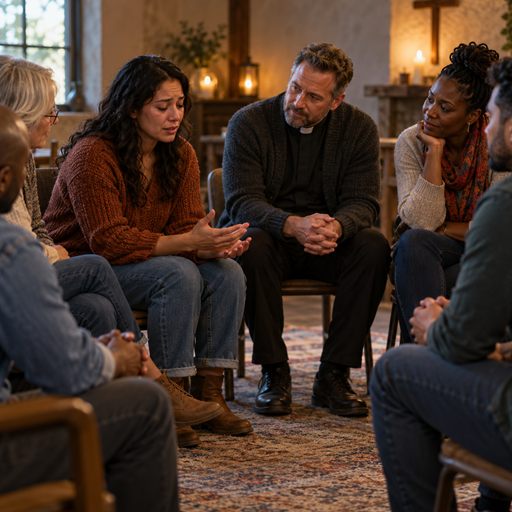
When the Church responds to pain with statements such as “You should be over that by now” or “If you really forgave them, you would not still be upset,” it can unintentionally add condemnation to an already painful experience. Such responses may teach people to conceal their struggles rather than seek help, and they may protect the appearance of peace while leaving the underlying harm unaddressed.
A healthy Christian community can uphold the biblical call to forgive while also recognizing that healing is not always immediate or predictable. It can pray with people without demanding that they perform a particular emotional response. It can encourage reconciliation when appropriate without forcing contact with someone who remains unsafe or unwilling to take responsibility. It can listen to concerns fairly, maintain confidentiality where appropriate, and respond to credible reports of misconduct through proper accountability and safeguarding procedures.
Leaders should understand that a person’s continued distress does not, by itself, establish that the person is bitter or unforgiving. Nor does a person’s claim of forgiveness mean that every concern has been resolved. Spiritual maturity includes the ability to recognize complexity, exercise patience, seek truth, and distinguish emotional healing from questions of accountability.
The Church also has a responsibility to avoid making every conversation about past hurt an opportunity to defend its reputation. When a person is struggling with a memory connected to a church experience, the first response should not automatically be to protect a leader, preserve an image, or persuade the wounded person to return to the same environment. The appropriate response is to listen, assess the concern honestly, protect people from ongoing harm, and support a path toward healing that respects both truth and safety.
Galatians 6:2 calls believers to bear one another’s burdens. Bearing a burden does not mean forcing another person to heal on our schedule. It means remaining compassionate while they take responsible steps forward, offering support without controlling their process, and refusing to use Scripture to silence the very people who need its comfort.
The Church should be a place where truth can be spoken, accountability can occur, forgiveness can be taught faithfully, and healing can unfold without shame. When the Church learns to make room for this process, it becomes better equipped to demonstrate the compassion of Christ to people who are still learning how to live beyond what happened to them.
A Prophetic Call: Stop Building Your Future Around Yesterday’s Injury
There comes a time when you must ask whether the person who hurt you is still influencing decisions they no longer have the right to make. Perhaps they no longer speak to you, yet you still measure your worth by the things they said. Perhaps the relationship ended years ago, yet you continue rejecting opportunities because you fear experiencing the same disappointment. Perhaps you have moved into a healthier environment, but you keep expecting the same patterns to appear, even when the people around you are demonstrating a different character.

The point is not to blame yourself for the effects of what you endured. Deep wounds can take time to heal, and some experiences require professional support, sustained care, and practical changes in order to recover a sense of safety. The point is to recognize that your future deserves more than a permanent reaction to another person’s choices.
You do not have to prove that you have healed by trusting everyone, returning to a harmful relationship, or exposing yourself to situations that compromise your safety. You can remain discerning. You can say no. You can insist on accountability. You can choose relationships slowly and make decisions based on evidence rather than pressure. None of these choices requires you to surrender your freedom to bitterness.
But you must also guard against allowing caution to become a life sentence of isolation. If betrayal has taught you to expect dishonesty from everyone, ask God to help you distinguish wisdom from fear. If humiliation has made you afraid to use your gifts, begin taking appropriate steps toward the work you believe you are called to do. If a painful church experience has made worship difficult, give yourself room to grieve and seek a healthy path forward rather than forcing yourself to pretend that nothing happened.
The prophetic challenge is not that you must forget yesterday before God can use you today. It is that you must not give yesterday unlimited authority over tomorrow. Your experience may influence your wisdom, but it does not have to dictate every decision. Your history may explain certain struggles, but it does not have to become the only story you tell about yourself.
There is life beyond the conversation that wounded you. There is purpose beyond the opportunity you lost. There are relationships that can be built on honesty, communities that can practice accountability, and opportunities to serve that do not require you to return to the place where you were harmed. You may need time, support, and careful steps to discover those possibilities, but you do not have to abandon the possibility of a meaningful future simply because the past was painful.
Let the memory remind you of what you learned, not merely what you lost. Let discernment grow without allowing suspicion to consume you. Let forgiveness release your claim to personal vengeance, and let wisdom guide your next steps. Above all, refuse to measure the rest of your life by the worst thing another person did to you.
God’s work in you is not confined to the season when you were wounded. You are still becoming, still learning, still capable of loving wisely, serving faithfully, and building a future that reflects more than the injury you survived.
Conclusion: The Past Can Be Remembered Without Being Repeated
The prison of remembering is not simply the presence of painful thoughts. It is the belief that because something happened to you, it must continue determining what is possible for you. It is the fear that a returning memory proves you have failed, the assumption that you cannot experience peace until every unanswered question is resolved, and the conviction that your future must remain restricted because your past was painful.
But you can learn to remember without repeatedly surrendering your peace to the memory. You can acknowledge the wound without reopening it through unnecessary rumination, and you can seek help when the pain becomes overwhelming without concluding that your faith is inadequate. You can pursue justice where appropriate, maintain boundaries where necessary, and continue choosing forgiveness without denying the seriousness of what occurred.
Some memories may soften with time. Others may remain meaningful reminders of what you survived, what you learned, and what you now recognize as important. There is no need to measure your progress by whether you can recall every detail without emotion. Instead, notice whether you are becoming more able to respond with wisdom, remain present in your life, establish healthy relationships, and make decisions that reflect your values rather than your fear.
When the memory returns, you do not have to fight yourself for remembering. You can acknowledge the thought, receive the support you need, and turn your attention toward the next faithful step. You can remind yourself that forgiveness remains your chosen response, that accountability remains important, and that another person’s wrongdoing does not own the rest of your life.
You are not required to deny yesterday in order to live today. You are not required to become numb in order to demonstrate spiritual maturity. And you are not required to wait until every trace of pain disappears before you begin building again.
Let the past remain a chapter of your story rather than the author of every chapter that follows. Let God continue the work of renewing your mind, healing your heart, and strengthening your ability to live with both compassion and discernment. The memory may return, but you can continue moving forward.
You may carry the memory of what happened without carrying the burden of letting it happen all over again in your mind every day.
CHAPTER 16 STUDY GUIDE
Continue Your Study
Open the companion guide for discussion questions, personal reflection, and prayer connected to this chapter.
Open Chapter 16 Study Guide →
CHAPTER 16 STUDY GUIDE
Continue Your Study
Open the companion guide for discussion questions, personal reflection, and prayer connected to this chapter.
Open Chapter 16 Study Guide →