Observe
Watch for meaningful behaviors, interactions, emerging skills, interests, and developmental changes during everyday classroom experiences.
Monitor children's development throughout the school year with ongoing documentation, observations, developmental evidence, reflection, and intentional planning.
Progress monitoring is an ongoing process of gathering meaningful information about children's learning and development and using that information to guide responsive teaching.
Watch for meaningful behaviors, interactions, emerging skills, interests, and developmental changes during everyday classroom experiences.
Record observations and collect evidence that helps create a clear picture of each child's development over time.
Review collected information to identify strengths, emerging skills, interests, patterns, and areas requiring continued attention.
Use documentation to plan intentional teaching strategies, learning opportunities, and appropriate supports.
Progress monitoring works best as a continuous cycle rather than a single assessment event.
Notice what children are doing, saying, attempting, communicating, and discovering.
Capture objective observations, dates, contexts, child words, and relevant evidence.
Look across documentation to identify developmental growth and recurring patterns.
Identify intentional teaching opportunities, strategies, goals, and next steps.
Continue observing and documenting so progress can be followed across time.
Organize ongoing documentation around the areas of development and learning that are meaningful for each child.
Communication attempts, vocabulary, language comprehension, conversations, gestures, and expressive language.
Gross motor movement, fine motor coordination, balance, strength, coordination, and physical independence.
Relationships, emotional expression, self-regulation, social interactions, and developing independence.
Problem solving, exploration, memory, reasoning, attention, curiosity, and understanding.
Interest in books, print awareness, storytelling, drawing, writing attempts, sounds, and communication through symbols.
Counting, quantity, classification, patterns, spatial relationships, comparison, and problem solving.
Use these resources to organize ongoing documentation, review progress, and plan responsive learning experiences.
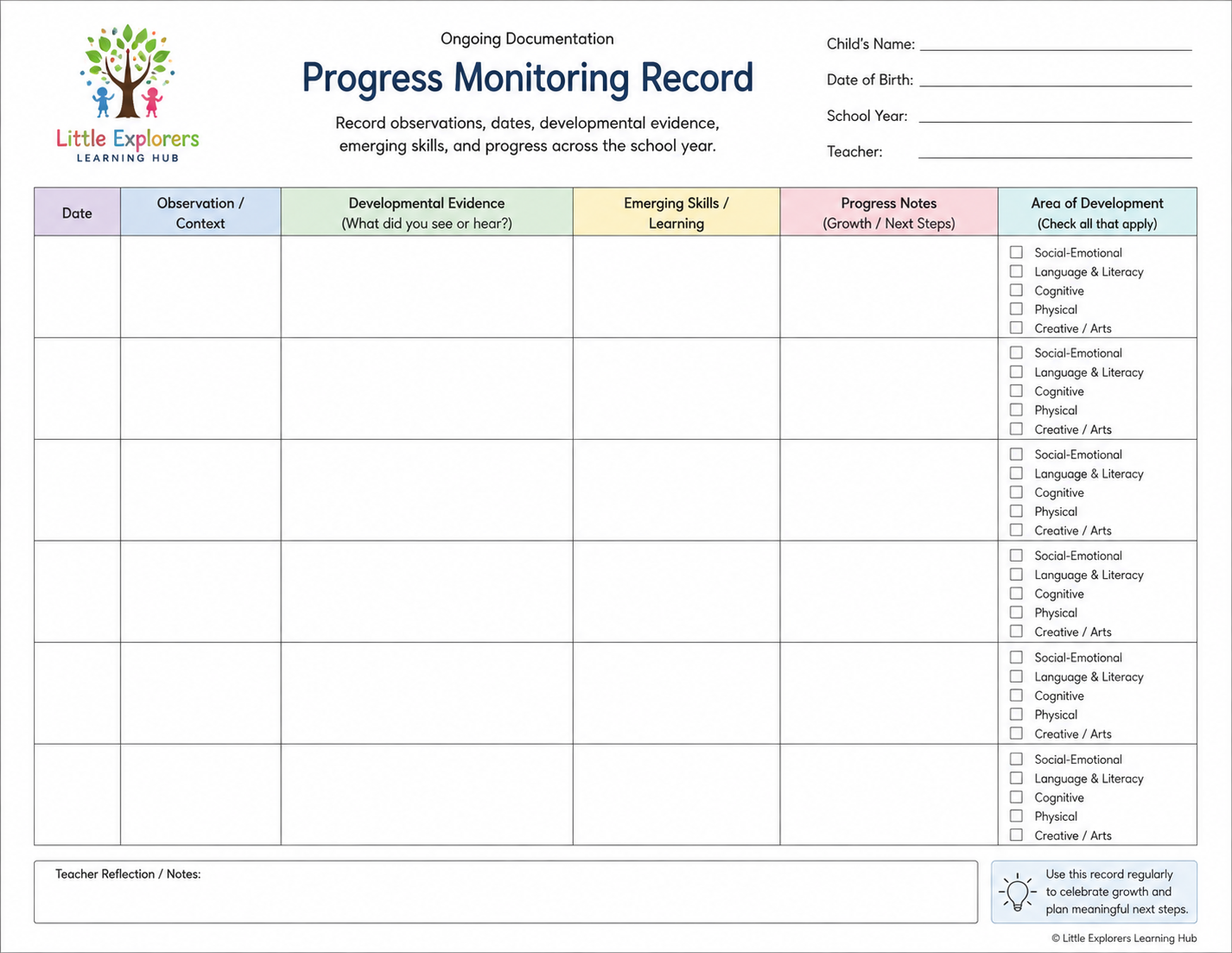
Record observations, dates, developmental evidence, emerging skills, and progress across the school year.
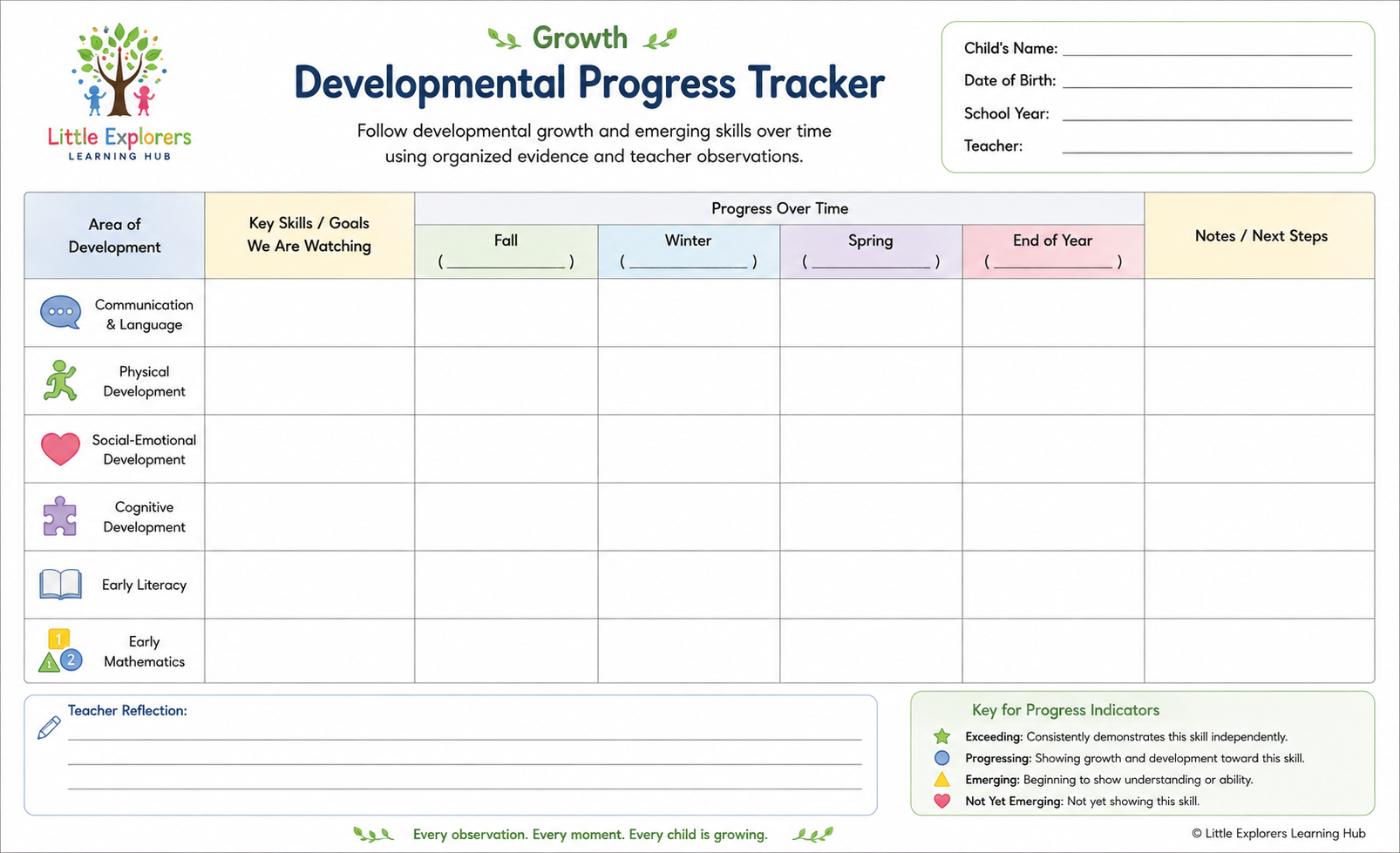
Download FormFollow developmental growth and emerging skills over time using organized evidence and teacher observations.
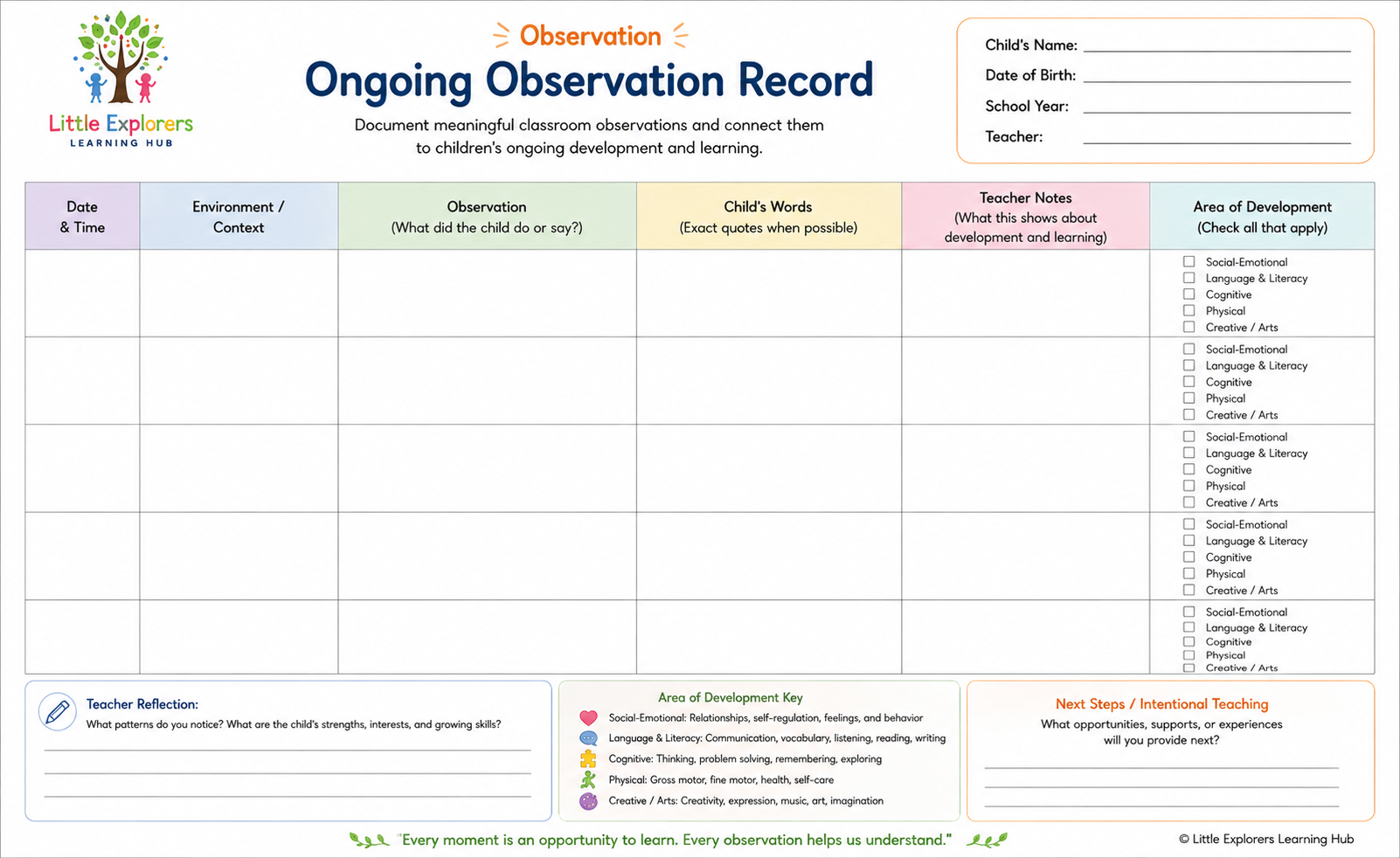
Download FormDocument meaningful classroom observations and connect them to children's ongoing development and learning.
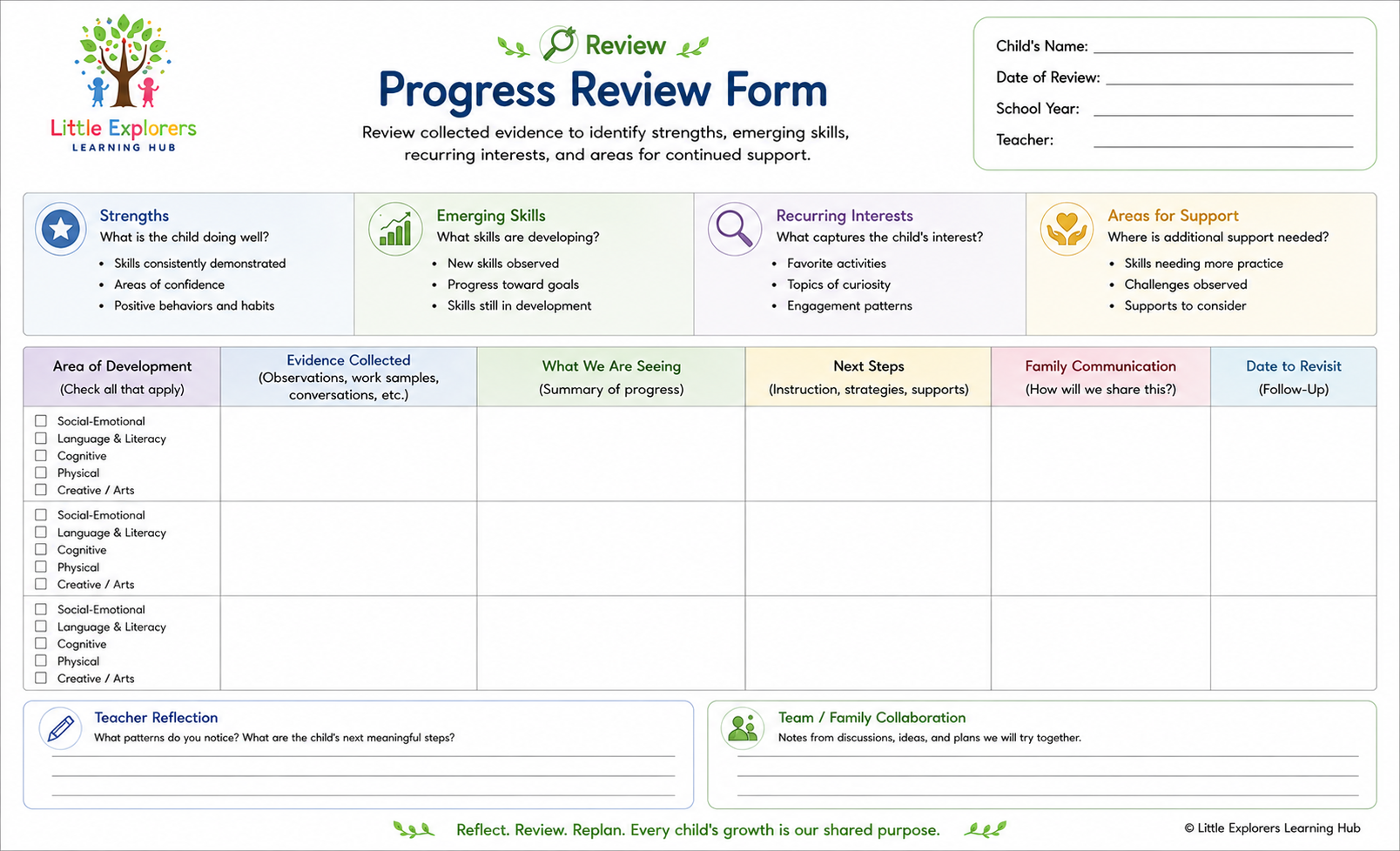
Download FormReview collected evidence to identify strengths, emerging skills, recurring interests, and areas for continued support.
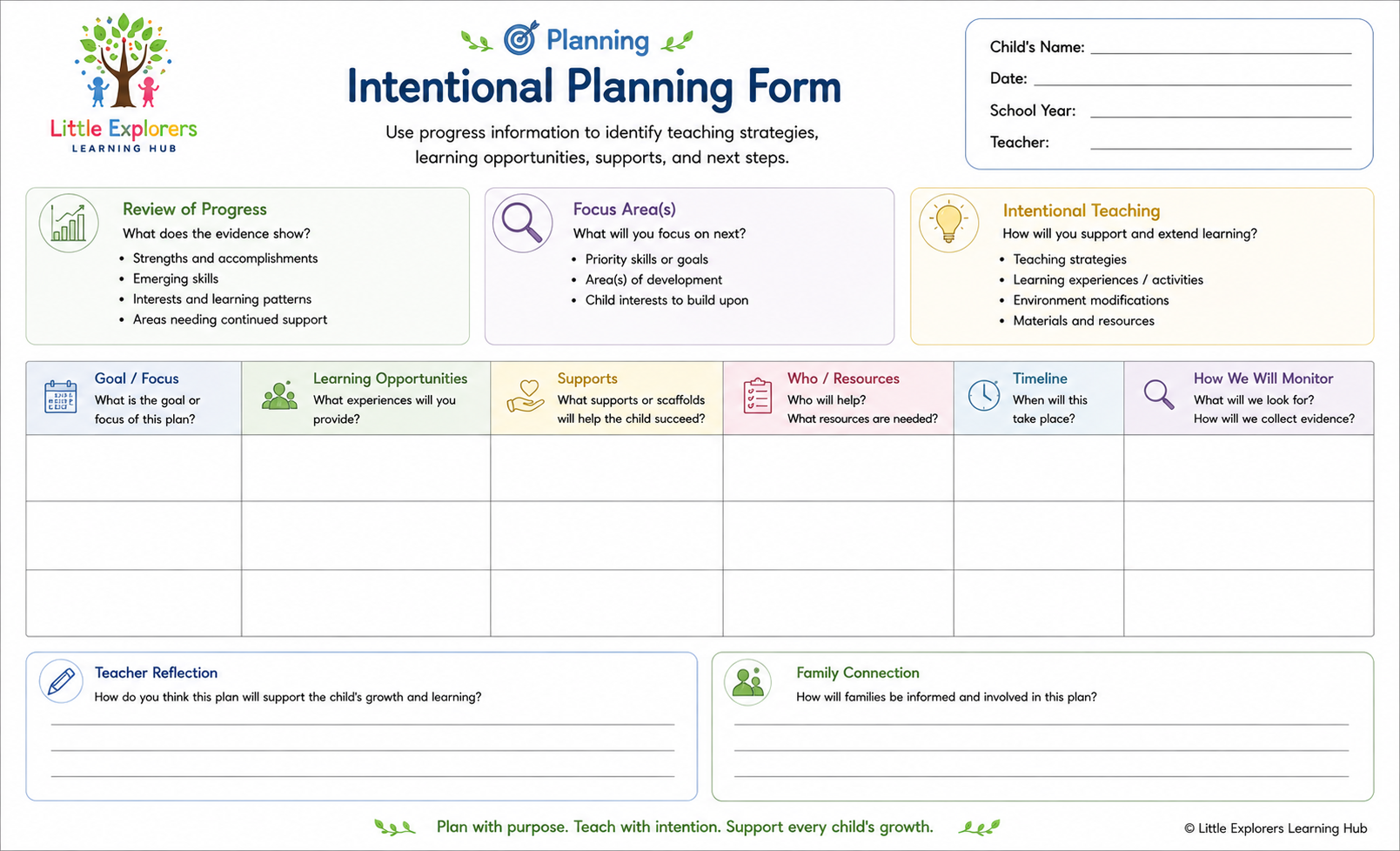
Download FormUse progress information to identify teaching strategies, learning opportunities, supports, and next steps.
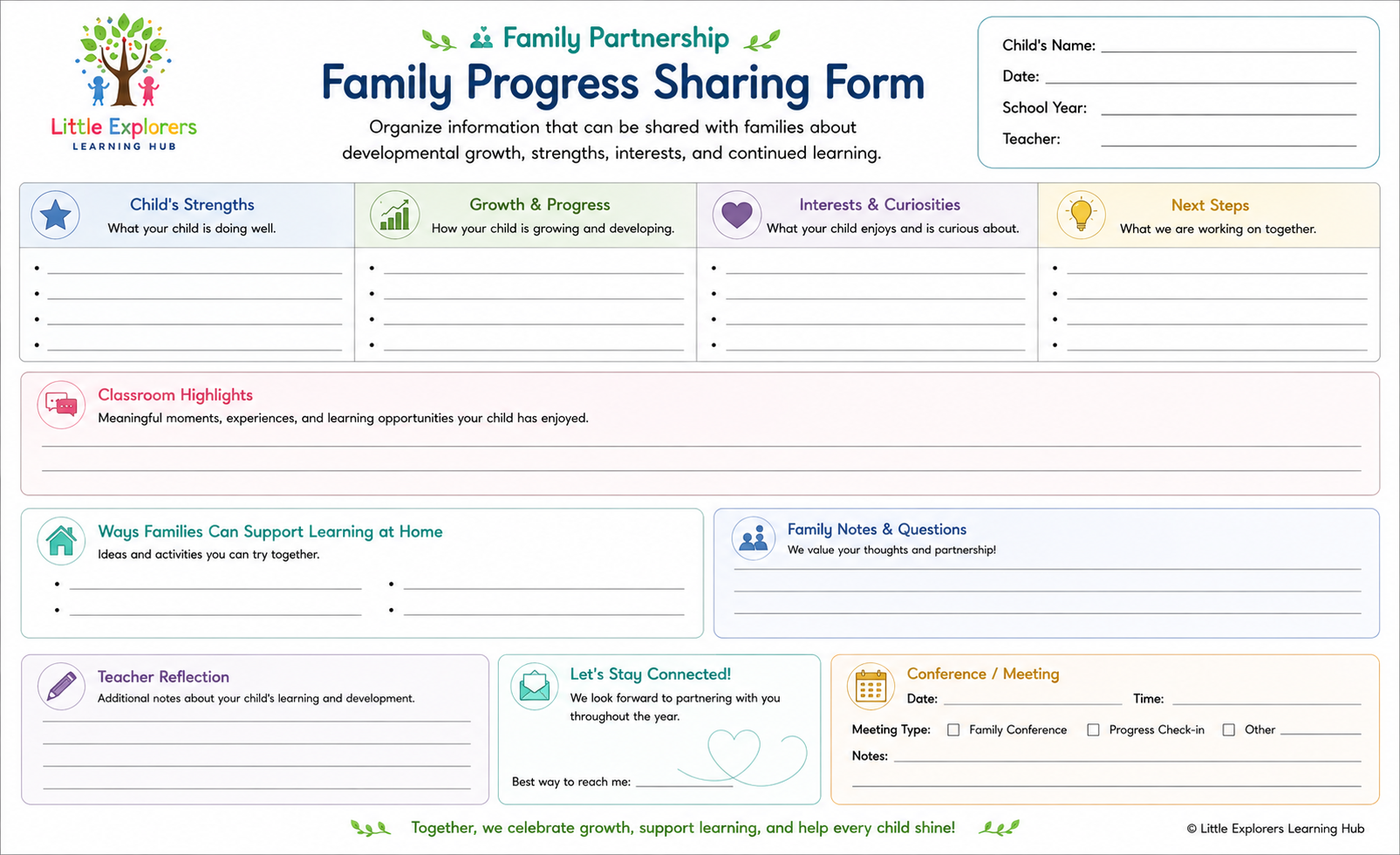
Download FormOrganize information that can be shared with families about developmental growth, strengths, interests, and continued learning.
Download FormProgress monitoring becomes meaningful when collected evidence informs what happens next. Review documentation regularly and consider what the child is showing you through their play, interactions, communication, exploration, and learning.
Consistent documentation helps teachers recognize growth, respond to children's needs, celebrate strengths, and make thoughtful decisions throughout the school year.
Explore Progress Monitoring Forms