
Flash Cards
Alphabet Flash Cards
Large uppercase and lowercase letter cards perfect for circle time, small groups, games, and classroom displays.
Build early literacy skills with engaging alphabet printables designed for Early Head Start, Head Start, Preschool, and Pre Kindergarten classrooms. Explore hands on resources that make learning letters fun, meaningful, and developmentally appropriate.
Children develop literacy through meaningful experiences with letters, sounds, books, songs, writing, and playful exploration. These printable resources help children recognize letters, strengthen fine motor skills, develop phonological awareness, and build confidence as beginning readers and writers.
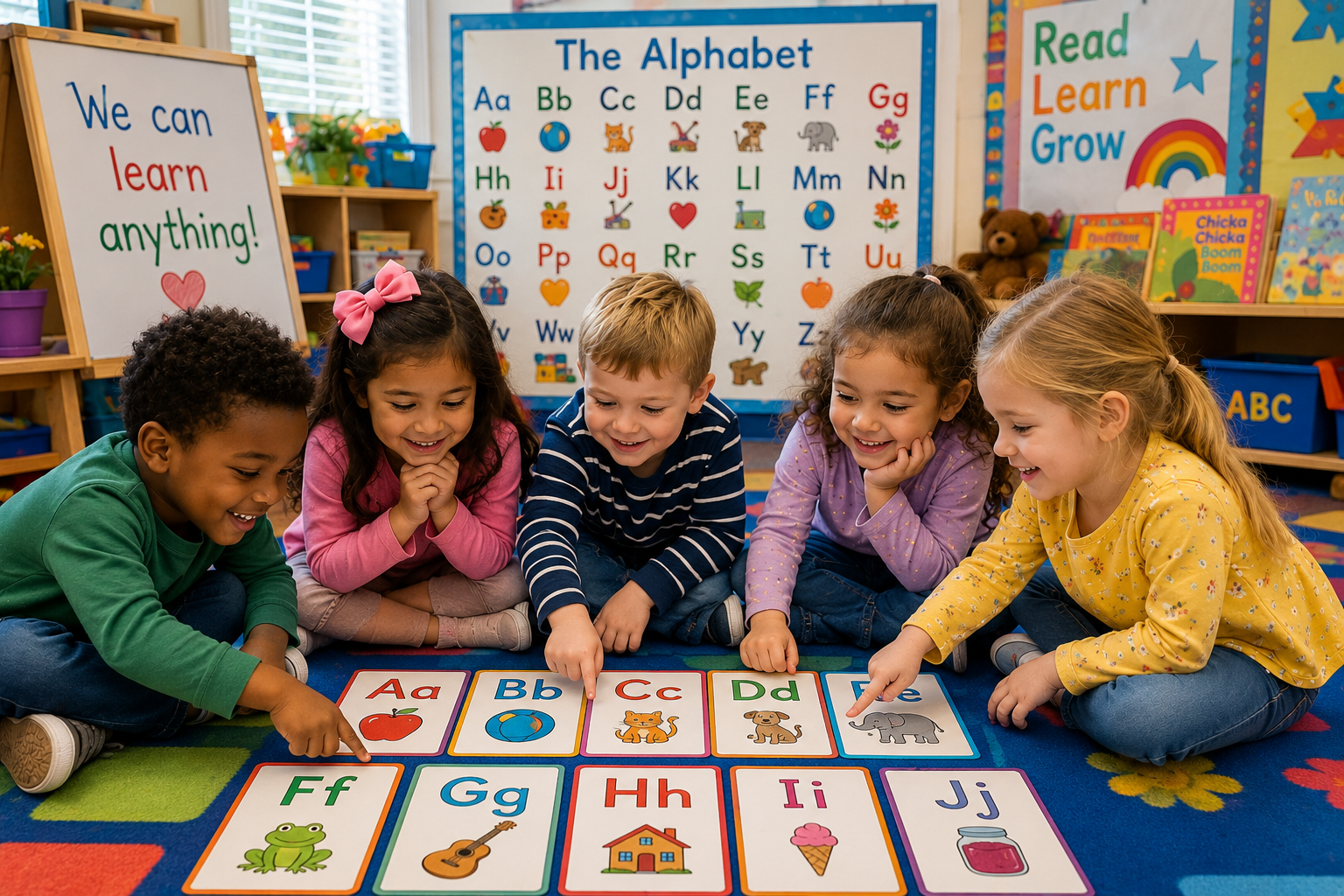
Children learn letters best through playful, meaningful experiences that combine movement, conversation, music, books, and hands on exploration.
Identify uppercase and lowercase letters through engaging games, matching activities, and classroom print.
Connect letters with sounds while building listening skills, rhyming, and beginning sound recognition.
Strengthen fine motor development through tracing, drawing, and letter formation activities.
Develop the foundational skills children need for confident reading and writing success.
Alphabet Printables
Letter Sets
Literacy Activities
Classroom Ready
Discover engaging printable resources that help children recognize letters, connect sounds, strengthen fine motor skills, and build confidence as beginning readers.
Large uppercase and lowercase letter cards perfect for circle time, small groups, games, and classroom displays.

Practice proper letter formation while strengthening pencil grip, hand control, and fine motor development.

Match uppercase and lowercase letters while building recognition, memory, and visual discrimination skills.

Bright classroom alphabet posters featuring letters, pictures, and beginning sounds.
Children benefit from recognizing both uppercase and lowercase letters through playful, meaningful experiences.
Practice identifying uppercase letters through matching games, puzzles, and classroom print.
Recognize lowercase letters while connecting them with books, names, and environmental print.
Match uppercase and lowercase letters using hands on games and printable activities.
Compare similar letters and strengthen observation skills through engaging practice.
Develop strong handwriting foundations through playful fine motor activities and guided practice.
Follow dotted lines to learn correct letter formation while building confidence.
Trace letters multiple times using different colors to reinforce recognition and motor memory.
Practice letters using sand, shaving cream, play dough, paint, and finger tracing.
Strengthen little hands with cutting, squeezing, pinching, and threading activities.
Learning letters becomes exciting when children move, play, explore, and discover together.
Recognize letters while playing classroom bingo with friends.
Build complete alphabets while strengthening matching and problem solving skills.
Search the classroom for hidden letters and identify them through movement.
Match letters with pictures to strengthen phonics and vocabulary development.
Transform alphabet printables into engaging literacy centers where children explore letters through meaningful, hands on learning experiences.
Pair alphabet cards with picture books so children can identify letters, sounds, and familiar words during independent reading.
Create an interactive alphabet display where children can match letters, pictures, and beginning sounds.
Provide tracing pages, alphabet strips, name cards, journals, and blank paper for authentic writing experiences.
Use printable alphabet puzzles to strengthen letter recognition, matching, and problem solving.
Alphabet resources can be used throughout the classroom to support meaningful literacy experiences every day.
Introduce the letter of the week using flash cards, songs, books, and interactive discussions.
Practice matching, tracing, beginning sounds, and letter formation with small instructional groups.
Allow children to choose alphabet games, puzzles, matching activities, and writing invitations.
Observe letter recognition, sound knowledge, fine motor skills, and early writing during everyday activities.
Movement and music help children remember letters while making literacy joyful and engaging.
Sing traditional alphabet songs and playful chants that reinforce letter names and sequencing.
Create body movements that represent each letter to strengthen memory through physical activity.
Clap syllables, beginning sounds, and rhyming words while strengthening phonological awareness.
Jump, hop, crawl, and move to matching letters during active classroom games.
Intentional small group instruction provides opportunities to individualize literacy learning and support every child.
Match uppercase and lowercase letters while discussing letter names and sounds.
Sort picture cards by beginning sounds to strengthen phonemic awareness and vocabulary.
Practice proper letter formation using tracing pages, dry erase sleeves, and reusable markers.
Read alphabet themed books while identifying featured letters and familiar vocabulary.
Offer children opportunities to practice alphabet skills independently while building confidence and responsibility.
Provide alphabet matching cards, puzzles, and tracing pages for independent morning work.
Invite children to explore alphabet games and literacy materials during center time.
Send printable activities home to strengthen school and family partnerships.
Encourage children to identify letters in books, classroom labels, and environmental print.
Families can strengthen alphabet knowledge through fun, everyday experiences that encourage conversation, reading, and exploration.
Read alphabet books each day and encourage children to point to familiar letters and pictures.
Search for letters on cereal boxes, signs, magazines, clothing, and household items.
Write letters using crayons, chalk, markers, paint, or even fingers in sand and shaving cream.
Sing alphabet songs together during car rides, bath time, bedtime, or everyday routines.
Create engaging literacy environments where alphabet learning becomes part of children's everyday experiences.
Focus on a small group of letters at a time instead of teaching the entire alphabet at once.
Connect letters to children's names, favorite books, classroom themes, and everyday vocabulary.
Games, songs, movement, dramatic play, and hands on activities encourage deeper learning.
Recognize every child's growth and provide encouragement throughout the learning process.
Alphabet learning supports foundational literacy skills that prepare children for reading and writing success.
Recognize uppercase and lowercase letters in books, signs, labels, and classroom print.
Connect letters with beginning sounds through meaningful vocabulary and conversations.
Develop pencil control and handwriting readiness through tracing and writing experiences.
Expand expressive and receptive language through songs, books, conversations, and storytelling.
Observe children naturally throughout the day to understand their alphabet knowledge and literacy development.
Notice how children recognize letters during games, books, centers, and classroom routines.
Save drawings, name writing, tracing pages, and independent writing throughout the year.
Pay attention to children's use of letter names, sounds, and literacy vocabulary during play.
Photograph literacy experiences and record observations to celebrate children's growth.
Children develop alphabet knowledge over time through repeated, meaningful experiences.
Notice and identify familiar uppercase and lowercase letters.
Say letter names confidently during songs, games, and classroom activities.
Associate letters with beginning sounds and familiar vocabulary.
Practice forming letters independently while building confidence as young writers.
Download ready to print alphabet resources that make literacy instruction engaging, organized, and fun for every classroom.
Large uppercase and lowercase alphabet cards perfect for circle time, literacy centers, and small group instruction.
Printable tracing pages that strengthen fine motor skills while teaching proper letter formation.
Interactive printable games that reinforce uppercase and lowercase matching, beginning sounds, and visual discrimination.
Bright classroom alphabet posters featuring letters, beginning sound pictures, and colorful visual supports.