
Morning
Arrival Routine
Welcome every child warmly while encouraging independence with belongings and morning choices.
Create calm, welcoming, and engaging classrooms where children feel safe, respected, and excited to learn. Discover practical classroom management strategies that build positive relationships, encourage cooperation, and support every child's success.
Effective classroom management is about much more than preventing challenging behaviors. It is about creating an environment where children feel secure, valued, and confident to explore, learn, and build meaningful relationships. Through consistent routines, positive guidance, engaging learning experiences, and caring teacher child interactions, classrooms become joyful communities where every child can succeed.
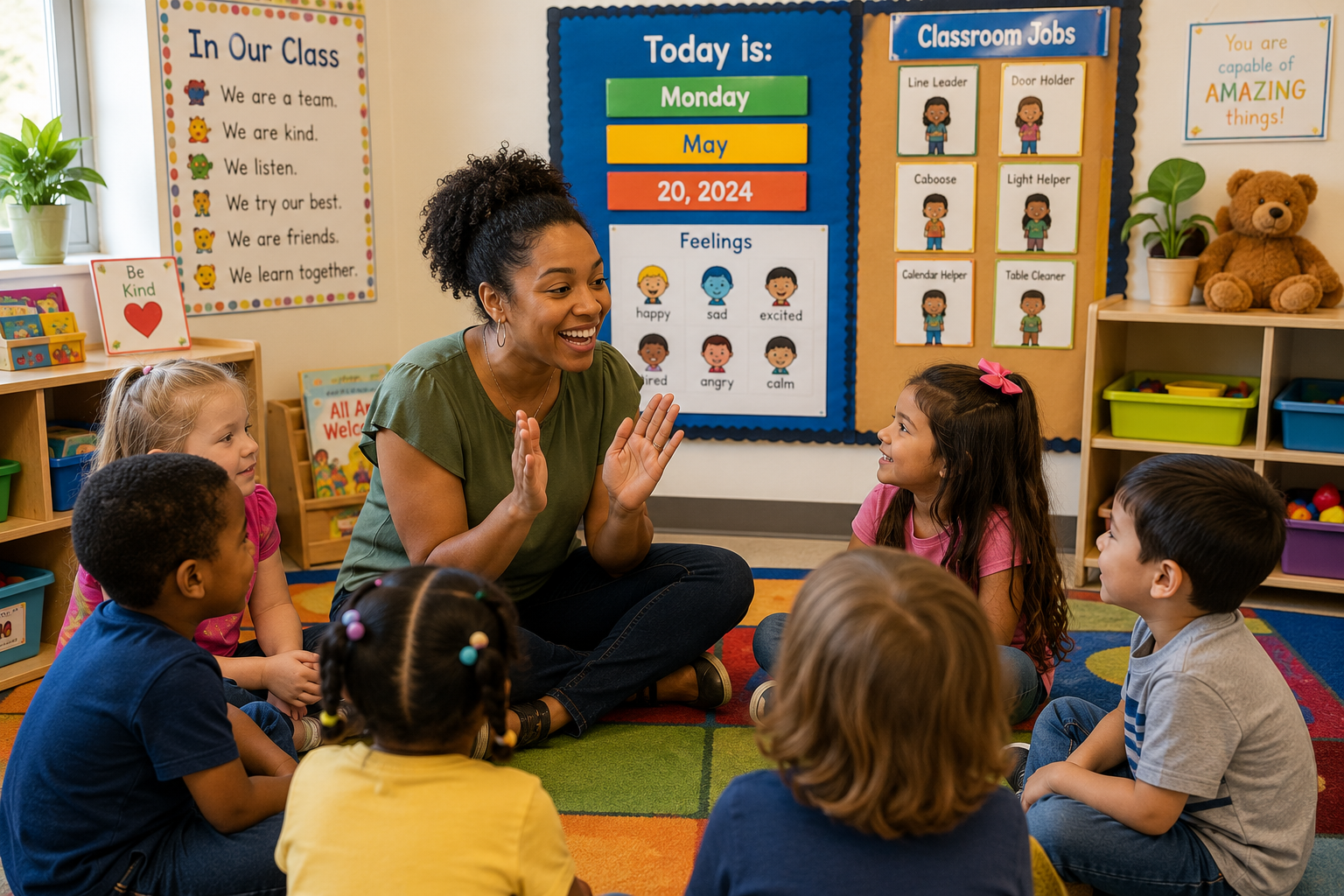
Strong classroom management creates an environment where children can develop confidence, independence, self regulation, and a lifelong love of learning.
Children thrive when they feel emotionally and physically safe, valued, and respected every day.
Supportive teacher child relationships encourage trust, cooperation, communication, and confidence.
Children learn to recognize emotions, solve problems, and make positive choices through guidance and practice.
Consistent routines and expectations create classrooms where children can focus on meaningful learning experiences.
Management Strategies
Teacher Tips
Classroom Ideas
Positive Guidance
Positive relationships are the heart of effective classroom management. Children learn best when they know they are safe, loved, respected, and encouraged.
Learn each child's interests, strengths, culture, personality, and learning style to create meaningful connections.
Give children your full attention, acknowledge their feelings, and respond with patience and empathy.
Celebrate effort, persistence, kindness, and problem solving more often than correcting mistakes.
Keep routines consistent, follow through on promises, and create an environment where children feel secure.
Children succeed when expectations are clear, positively stated, practiced regularly, and modeled by caring adults.
Teach children to care for friends, use gentle hands, respectful words, and show empathy.
Practice listening during stories, conversations, songs, and group discussions.
Model cleaning up, organizing supplies, and treating classroom materials with care.
Encourage teamwork, sharing, cooperation, and helping classmates throughout the day.
Predictable routines reduce anxiety, build independence, and help children understand what comes next.
Welcome every child warmly while encouraging independence with belongings and morning choices.
Maintain a predictable daily rhythm that balances active play, quiet learning, meals, and rest.
Provide meaningful learning centers where children explore independently and collaboratively.
Review the day's learning, celebrate accomplishments, and prepare children for a smooth transition home.
Guide behavior by teaching, modeling, encouraging, and supporting children rather than relying on punishment.
Tell children what to do instead of only what not to do by giving clear, encouraging directions.
Demonstrate kindness, patience, cooperation, and problem solving through your own daily actions.
Notice positive choices immediately and provide specific encouragement that builds confidence.
Help children identify problems, express feelings, consider solutions, and work together respectfully.
A thoughtfully designed classroom encourages independence, reduces challenging behaviors, and invites children to explore with confidence.
Arrange clearly defined centers with labeled materials that children can access and return independently.
Create separate areas for reading, dramatic play, building, art, science, and quiet activities.
Use schedules, classroom rules, labels, and picture cues to help children understand expectations.
Use natural lighting, organized materials, and inviting spaces to create a peaceful classroom environment.
Teaching social emotional skills helps children build friendships, regulate emotions, solve problems, and become confident learners.
Help children identify and name their feelings using books, conversations, and visual emotion charts.
Encourage children to communicate their emotions with respectful words instead of challenging behaviors.
Teach sharing, taking turns, cooperation, empathy, and respectful communication through everyday interactions.
Celebrate effort, perseverance, kindness, and personal growth to strengthen children's self esteem.
Well planned transitions reduce stress, minimize behavior challenges, and keep children actively engaged throughout the day.
Use familiar songs and chants to signal cleanup, lining up, and moving between activities.
Display daily schedules with pictures so children know what comes next.
Include stretching, dancing, and simple exercises before transitioning into quieter activities.
Provide five minute and two minute reminders before ending activities to prepare children for change.
Many behavior challenges can be prevented through engaging instruction, consistent routines, and supportive relationships.
Watch for patterns, triggers, and children's individual needs before behaviors become challenging.
Offer meaningful activities that match children's developmental levels and interests.
Show children appropriate ways to ask for help, express emotions, and solve conflicts peacefully.
Recognize positive behavior consistently to reinforce kindness, cooperation, and responsibility.
Every classroom benefits from a quiet space where children can regulate emotions, relax, and return to learning when ready.
Provide soft seating, calming visuals, and comforting materials in a peaceful area.
Offer picture books that help children understand emotions, kindness, and self regulation.
Include fidget tools, sensory bottles, weighted items, and calming manipulatives when appropriate.
Teach simple breathing exercises that help children calm their bodies and refocus their attention.
Strong partnerships between teachers and families create consistency, strengthen relationships, and help every child thrive at school and at home.
Share children's successes, challenges, and classroom experiences through positive, ongoing communication.
Collaborate with families to develop consistent routines, expectations, and behavior support strategies.
Meet regularly with families to celebrate progress, discuss goals, and strengthen partnerships.
Provide simple activities that reinforce classroom routines, social skills, and positive behaviors at home.
Children benefit most from teachers who care for their own physical, emotional, and professional well being.
Prepare your classroom, organize materials, and start each morning with confidence and purpose.
Stay hydrated, eat nourishing meals, rest when possible, and recognize when you need support.
Collaborate with coworkers, administrators, and specialists to solve problems and celebrate successes.
Seek new ideas, attend trainings, and reflect on your teaching to strengthen your classroom practice.
Successful classroom management begins with intentional planning, positive relationships, and consistent teaching practices.
Keep routines and expectations consistent so children know what to expect every day.
Prepare engaging lessons and organized materials that keep children actively involved.
Build trusting relationships first, then guide children with patience, empathy, and encouragement.
Evaluate classroom practices regularly and make thoughtful changes that better support children.
Careful observation helps teachers understand children's strengths, needs, interests, and behavioral patterns.
Watch children's interactions, play, communication, and responses throughout the day.
Write objective observations that help identify patterns and guide future planning.
Collect photographs, work samples, and learning stories that celebrate children's progress.
Use documentation to improve classroom environments, routines, and instructional strategies.
Taking a few moments each day to reflect helps teachers grow professionally and continuously improve classroom experiences.
Recognize moments of growth, kindness, engagement, and joyful learning throughout the day.
Reflect on difficult moments and identify strategies that may better support children tomorrow.
Adjust lessons, routines, and classroom organization based on daily observations.
End each day with a plan that prepares you and your children for another successful learning experience.
Outstanding classroom management develops through continuous learning, reflection, collaboration, and a commitment to meeting the needs of every child.
Create classroom expectations and learning experiences that reflect children's ages, abilities, interests, and developmental needs.
Share ideas, observe one another, and work together to strengthen classroom management strategies.
Evaluate classroom routines, transitions, and guidance strategies to improve children's daily experiences.
Continue growing through conferences, workshops, coaching, professional reading, and ongoing reflection.
Download practical classroom management resources designed to create calm, engaging, and successful learning environments.
Printable classroom reminders that encourage kindness, responsibility, and respectful behavior.
Help children understand classroom routines with colorful picture schedules and transition cards.
Organize learning centers, shelves, and classroom materials with printable labels and signs.
Document behavior patterns, classroom observations, and positive developmental progress.