
Week 1
Getting to Know Trees
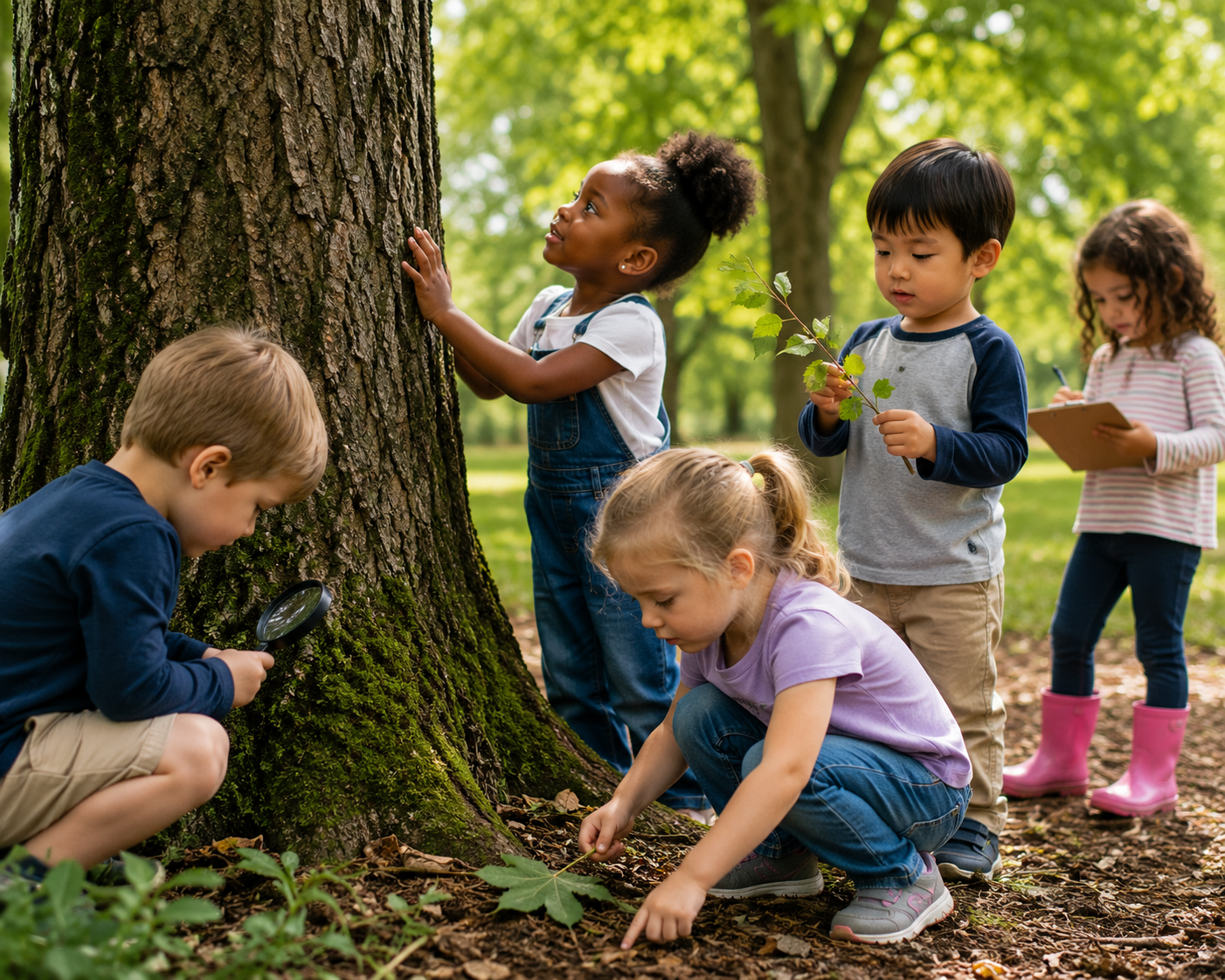
Children begin observing trees, identifying their parts, and sharing what they already know.
- Tree walks
- Observing bark
- Leaf collecting
- Nature journals
- Tree vocabulary
Children investigate trees through science, art, math, literacy, dramatic play, music, and outdoor exploration using affordable everyday materials.
Everything you need for the Trees Study in one place.
The Trees Study encourages children to observe, question, compare, measure, create, and discover the important role trees play in our environment.
Each week builds children's understanding through exploration, observation, discussion, and hands on learning.
Children begin observing trees, identifying their parts, and sharing what they already know.
Children investigate roots, seeds, leaves, water, sunlight, and seasons.
Explore animals, insects, birds, nests, habitats, and food that trees provide.
Children discover how trees help people, animals, and our planet.
Most classrooms already have these materials available.
Use quality literature to encourage discussion, vocabulary, and curiosity throughout the study.
Janice May Udry
Jennifer Ward
Lois Ehlert
Lois Ehlert
Movement song using arms, stretching, and counting.
Children pretend to float like leaves.
Simple movements showing roots, trunk, branches, and leaves.
Simple, affordable classroom invitations.
Build forests using wooden blocks and cardboard tubes.
Create leaf rubbings, bark paintings, and nature collages.
Add books about forests, trees, seasons, and wildlife.
Observe leaves with magnifying glasses and compare textures.
Transform the center into a campground or forest ranger station.
Dance like leaves blowing in the wind.
Float sticks, leaves, pinecones, and seeds.
Draw favorite trees and dictate observations.
Sort leaves by color, shape, and size.
Invite families to take a short walk together and look for different kinds of trees. Encourage children to collect one fallen leaf or draw their favorite tree to share with the class.