Chapter 7
The Church Must Repent Before It Can Heal
Key Scriptures: 2 Chronicles 7:14; Psalm 51:10–12; Isaiah 1:16–18; Matthew 23:23–28; Luke 19:1–10; James 5:16; Revelation 2:4–5.
Central Truth
A church begins to heal when it humbly acknowledges harm, turns from wrongdoing, and practices meaningful accountability. Protecting people and pursuing truth must matter more than preserving appearances or avoiding difficult conversations.
When the House of God Becomes a Place of Wounding
There is a painful contradiction that the Church must be willing to confront: the very place where wounded people should find healing can sometimes become the place where their wounds deepen. People enter the doors of a congregation carrying grief, shame, broken relationships, private battles, and a desperate desire to encounter the presence of God. They come hoping to find truth spoken with love, correction offered with humility, and leaders who understand that spiritual authority is a responsibility to serve rather than an opportunity to control. Yet some leave carrying burdens they did not bring with them, wondering whether their questions were sinful, their pain was an inconvenience, or their decision to speak honestly made them a threat to the people who were supposed to shepherd them.

We must be careful not to condemn the entire Church because some congregations and leaders have caused harm. The Church belongs to Jesus Christ, and countless pastors, ministers, teachers, and faithful believers labor with sincerity to care for people, preach truth, and serve their communities. However, our love for the Church must never become an excuse to conceal its failures. If we truly love the house of God, we must desire its cleansing, its correction, and its restoration. Love does not require us to pretend that nothing is wrong; sometimes the most faithful expression of love is the courage to acknowledge what has gone wrong and begin the difficult work of making it right.
The Church cannot preach repentance to the world while refusing to practice repentance within its own walls. It cannot demand accountability from the people in its pews while treating its own leadership as untouchable. It cannot proclaim the freedom of Jesus Christ while using shame, intimidation, spiritual manipulation, or fear to keep wounded people silent. And it cannot continually call people to the altar for personal transformation while refusing to bring its own attitudes, systems, and practices before the Lord for examination.
The question is not whether the Church has ever failed, because every congregation is made up of imperfect human beings who need grace and correction. The question is what the Church does when failure is exposed. Does it humble itself before God, listen to those who have been harmed, acknowledge the truth, and pursue meaningful change? Or does it protect its reputation, defend its preferred leaders, question the motives of the wounded, and move quickly toward a public appearance of peace without doing the work necessary for genuine restoration?
Healing begins when the people of God stop asking only how the Church has been wounded by criticism and begin asking how the Church itself may have wounded others.
Repentance Is More Than Saying the Right Words
Repentance has become a familiar word in Christian preaching, but familiarity can cause us to forget its seriousness. We know how to call people to repent of sin, turn away from destructive habits, surrender their pride, and return to God. We understand that repentance requires more than feeling sorry after being confronted. Genuine repentance involves a change of direction, a willingness to acknowledge wrongdoing, and a commitment to walk differently because the truth has become clear.
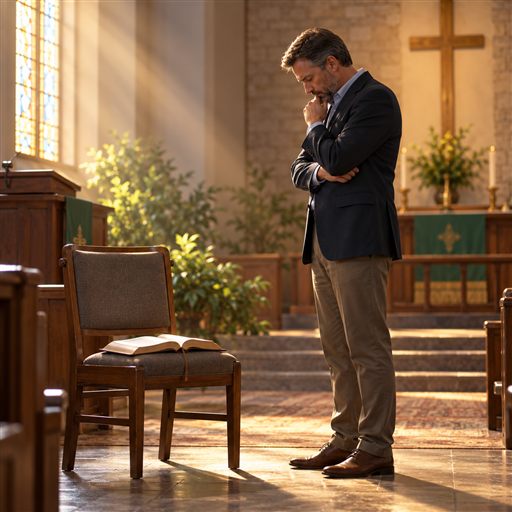
Yet when the conversation turns toward the failures of a congregation, a ministry, or a spiritual leader, the same standard can suddenly become uncomfortable. Tears may be mistaken for transformation, public apologies may be treated as complete restoration, and a declaration that everyone needs to move forward may replace the necessary work of confronting what happened. A leader may express sorrow that people were hurt without acknowledging the decisions or behaviors that caused the harm. A congregation may hold a special service of prayer while leaving the structures that permitted the wrongdoing completely untouched.
The Scriptures do not present repentance as a performance designed to protect an individual’s standing. In Psalm 51, David cries out for a clean heart and a renewed spirit after being confronted with serious sin. His prayer is not merely a request to escape consequences. It is a plea for inward transformation and restoration before God. David recognizes that his need is deeper than repairing his public image; he needs the Lord to deal with the condition of his heart.
This distinction matters because remorse and repentance are not identical. Remorse may grieve the loss of trust, the exposure of wrongdoing, the damage to a ministry, or the consequences of a decision. Repentance confronts the wrongdoing itself and accepts responsibility for turning away from it. A person can regret being exposed without truly regretting the harm inflicted upon others. A ministry can regret the attention brought by a scandal without examining the culture that allowed the scandal to develop.
The evidence of repentance is not perfection after one apology, but a credible pattern of humility, truthfulness, changed behavior, and accountability. There may be a long process of rebuilding, and not every consequence can be reversed. Trust may take time to recover, and in some circumstances it may never be appropriate to restore the relationship or the former position of authority. Nevertheless, where repentance is genuine, there should be a willingness to accept the cost of doing what is right rather than demanding that everyone else absorb the cost of the wrongdoing.
The Church must recover a form of repentance that does not stop at the altar but continues into the decisions made in offices, boardrooms, classrooms, counseling rooms, and ministry meetings. If our tears never produce changed conduct, we must ask whether we have truly surrendered the issue to God or merely experienced an emotional moment.
When Leadership Becomes an Untouchable Position
Spiritual leadership is a sacred responsibility, but it is not a license to escape scrutiny. The authority entrusted to a pastor, elder, teacher, or ministry leader is meant to help people grow in truth, faith, maturity, and service. It is not given so that the leader may become the center of a congregation’s loyalty or the final authority over every person’s conscience, relationships, and decisions.
Jesus made this distinction unmistakably clear when He taught His disciples that leadership in His kingdom must not imitate the domination practiced by worldly rulers. In Matthew 20:25–28, He explained that greatness among His followers is demonstrated through service, and He pointed to His own life as the example. Jesus did not describe spiritual greatness as the ability to silence opposition, demand unquestioning loyalty, or make people afraid to approach the truth. He described greatness through the willingness to serve.
When a leader begins to treat honest questions as rebellion, disagreement as disloyalty, and accountability as an attack on the anointing, something has become dangerously distorted. Spiritual language can then be used to defend behavior that should instead be examined. People may be told that questioning a decision means questioning God, that reporting misconduct demonstrates bitterness, or that leaving an unhealthy environment proves they have become offended. Such statements can burden sincere believers with fear and confusion, especially when they have been taught to respect spiritual authority but have not been taught how biblical authority is supposed to function.
Respect and accountability are not enemies. A person can honor the responsibilities of spiritual leadership while recognizing that leaders remain human beings who can misunderstand, misuse authority, make harmful decisions, and need correction. Scripture itself provides examples of accountability among people called by God. In Galatians 2:11–14, Paul describes confronting Peter over conduct that was inconsistent with the truth of the gospel. The passage does not invite reckless criticism of every leader; it demonstrates that even a prominent apostle’s conduct could be addressed when it compromised the truth.
No position in the Church should place a person beyond the reach of a fair and truthful process. At the same time, accusations must be taken seriously without automatically assuming guilt, and those accused must have an appropriate opportunity to respond. Biblical accountability is not mob judgment, gossip, or public humiliation. It requires integrity, careful examination of evidence, impartiality, and a commitment to protect people from further harm while the facts are established.
Where serious misconduct, abuse, exploitation, or criminal behavior is alleged, internal church procedures may not be sufficient. Appropriate civil authorities, safeguarding professionals, or independent investigators may need to be involved. Reporting to the proper authorities is not a denial of faith, and it must never be discouraged merely to protect a ministry’s name. The Church honors God not by controlling every conversation about wrongdoing, but by acting truthfully and responsibly when people’s safety and dignity are at stake.
The test of spiritual leadership is not whether a leader can prevent criticism. It is whether that leader can remain humble, truthful, and accountable when criticism raises a legitimate concern.
The Danger of Protecting a Reputation Instead of People
Reputation is not meaningless. A congregation’s credibility can influence whether families seek help, whether communities trust its outreach, and whether people are willing to listen to its message. There is nothing inherently wrong with desiring a ministry to have a good reputation. The danger comes when preserving that reputation becomes more important than telling the truth or protecting those who have been harmed.
When an allegation threatens the public image of a church, leaders may feel pressure to respond quickly. They may fear losing members, damaging relationships with other ministries, disappointing donors, or creating division within the congregation. Those fears can be real, but they can also tempt people to make decisions based on public relations rather than righteousness. Instead of asking what happened and what must be done, the first question becomes how to prevent the situation from spreading.
This is where wounded people can become treated as problems to be managed rather than human beings whose experiences deserve careful attention. A person who reports harm may be questioned more aggressively than the person whose conduct is being examined. The congregation may be urged to avoid discussing the matter before the facts have been established, yet that instruction may be applied selectively to prevent the person reporting harm from being heard. Leaders may speak about unity while neglecting the responsibility to establish truth.
Proverbs 28:13 teaches that concealing transgressions is not the path to mercy, while confession and forsaking wrongdoing are associated with finding mercy. This principle challenges any belief that concealment is the same as grace. Mercy does not require the Church to hide misconduct. Grace does not require leaders to deny the consequences of their decisions. And love does not demand that the wounded carry the burden of protecting the image of the person or institution that harmed them.
A congregation can acknowledge that a situation is serious without broadcasting private information or turning an investigation into public entertainment. Confidentiality may be necessary to protect those involved, preserve a fair process, and prevent further harm. But confidentiality must not be manipulated into a permanent barrier against accountability. There is a difference between handling sensitive information responsibly and concealing wrongdoing to shield someone from consequences.
If the Church wants to be trusted, it must become trustworthy. Trust cannot be commanded from the pulpit or restored through a carefully worded announcement. It grows when people see that truth matters even when it is uncomfortable, that leaders are willing to accept correction, and that those who speak up in good faith are not automatically punished for disturbing the peace.
The reputation worth protecting is not the appearance of an institution that never makes mistakes. It is the integrity of a people who are willing to tell the truth, repent when necessary, and pursue what is right even when the process costs them something.
The Wounded Must Be Heard Without Being Put on Trial
One of the most painful experiences for someone who has been hurt in a church setting is discovering that reporting the harm creates a second wound. The person may have already struggled to understand what happened, whether their concerns were legitimate, and whether speaking would threaten relationships that once felt like family. When they finally find the courage to speak, they may encounter suspicion, minimization, spiritual correction directed only at them, or pressure to forgive before anyone has fully acknowledged the injury.

Listening does not require a congregation to accept every allegation without examination. It does require the Church to understand that careful examination begins with taking the concern seriously rather than assuming the person must be bitter, rebellious, unstable, or motivated by revenge. A responsible process listens to the person reporting harm, records relevant details, considers available evidence, protects against retaliation, and gives all involved an appropriate opportunity to respond.
The Church must also recognize that the absence of immediate proof does not automatically establish that a report is false. Some experiences are difficult to document, and some people delay speaking because they are afraid of the consequences. At the same time, the seriousness of an allegation does not remove the need for fairness. A just process refuses both extremes: dismissing the wounded before hearing them and condemning the accused before the facts are responsibly examined.
There is wisdom in allowing people to tell their stories without demanding that they present their pain in a perfectly composed manner. Grief, fear, confusion, and anger may influence how someone describes an experience, but those emotions alone do not establish whether the report is true or false. The task is to seek the truth with care, not to reward the person who appears calmest or punish the person who struggles to speak.
James 1:19 instructs believers to be quick to hear, slow to speak, and slow to anger. This wisdom is particularly important when the truth threatens our loyalties. It is easy to listen patiently when the person speaking agrees with us. It is harder to listen when their words challenge a leader we admire, a ministry we helped build, or a community that has shaped our identity. Yet that is precisely when humility becomes necessary.
A church that listens well does not promise every person the outcome they desire. It promises to treat concerns seriously, pursue the truth, protect appropriate confidentiality, and refuse retaliation against those who raise concerns in good faith. It recognizes that the purpose of accountability is not to produce a predetermined verdict but to establish what is true and respond in a manner consistent with justice, safety, and Christian integrity.
People should not have to prove their spiritual worth before their concerns are heard. Their testimony must be examined fairly, and their humanity must be respected throughout the process.
Confession Must Lead to Change
When the Lord exposes a problem, the goal is not simply to identify who failed. The goal is to bring the situation into the light so that truth can be established, harm can be addressed, and the conditions that permitted wrongdoing can be changed. This requires more than a general statement that mistakes were made. It requires a willingness to identify the conduct or decisions that were wrong and to take appropriate steps to prevent their repetition.
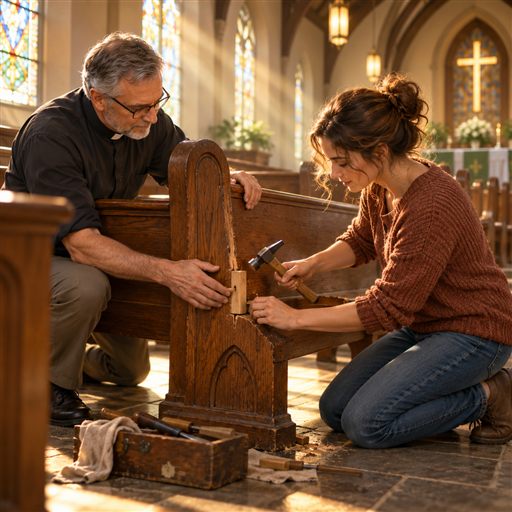
Sometimes meaningful change begins with an apology. An apology should be specific enough to acknowledge the harm rather than hide behind vague language. Saying, “I am sorry that people were offended,” can shift responsibility onto the feelings of those affected, especially when the real issue is conduct that should never have occurred. A more accountable response names the action, acknowledges its impact, accepts responsibility where responsibility belongs, and identifies the steps being taken to make things right.
Restitution may also be necessary. In Luke 19:1–10, Zacchaeus responds to his encounter with Jesus by committing to give to the poor and repay those he has defrauded. His response demonstrates that a changed heart can produce concrete action. His example does not mean that every situation can be repaired financially or that every person must make the same form of restitution. It does remind us that repentance is not indifferent to the damage wrongdoing has caused.
For a church, change may involve revising policies, strengthening safeguarding procedures, establishing independent reporting channels, providing training, removing conflicts of interest, or ensuring that allegations against senior leaders are not investigated solely by their closest allies. It may involve removing someone from a position of responsibility while concerns are investigated, or permanently restricting a person from a role when the facts and applicable standards justify that decision. The appropriate response depends on the nature and seriousness of the conduct, the evidence, and the safety of those involved.
Not every mistake requires the same consequence, and not every conflict is evidence of abuse or deliberate wrongdoing. Wisdom requires distinctions. A misunderstanding may call for clarification and reconciliation. A pattern of harmful leadership may require formal correction and changes in oversight. Serious misconduct may require independent investigation and involvement of civil authorities. The Church must resist both the temptation to exaggerate every disagreement and the temptation to minimize serious wrongdoing because the person responsible is influential.
Accountability must also continue after the initial response. A ministry may announce new procedures, but those procedures must be implemented and reviewed. A leader may promise change, but the change must be observable over time. A congregation may ask for forgiveness, but it must demonstrate that it understands what went wrong and is willing to prevent the same harm from recurring.
Repentance does not demand that the wounded immediately trust again. It asks the person who caused harm to do what is right regardless of whether trust is restored quickly. That is part of the cost of genuine change, and it is a cost the Church must be willing to accept.
Forgiveness Is Not a Substitute for Repentance
Because forgiveness is central to the Christian life, it is sometimes used in ways that place an unfair burden on the person who has been harmed. The wounded may be told to forgive and move on while the person responsible is never asked to acknowledge the wrongdoing. They may be encouraged to restore fellowship without evidence of change, surrender reasonable boundaries, or stop discussing the matter even when necessary accountability remains incomplete.
This approach confuses two distinct responsibilities. Forgiveness concerns the wounded person’s response to the wrong that has been committed. Repentance concerns the response of the person who committed the wrong. Reconciliation concerns the restoration of a relationship, and it generally requires a willingness to address the harm and rebuild trust. These realities are related, but they are not interchangeable.
A person can begin the process of forgiveness without receiving an apology. They can surrender the desire for personal vengeance while still reporting misconduct, pursuing lawful remedies, or maintaining distance from someone who is unsafe. They can pray for the person who hurt them without returning to a situation that exposes them to further harm. None of these actions automatically contradicts forgiveness.
Likewise, a leader cannot demand forgiveness as a means of escaping accountability. An apology does not erase consequences, and a declaration of repentance does not entitle someone to immediate restoration to a position of authority. Forgiveness may be freely offered, but trust must be rebuilt through credible conduct, and certain responsibilities may remain inappropriate even after sincere repentance.
Jesus’ teaching about mercy never gives the Church permission to call evil good or to treat vulnerable people as expendable. The same Scriptures that command believers to forgive also call them to truth, justice, protection of the vulnerable, and faithfulness to what is right. We must not isolate one biblical principle and use it to silence another.
The Church should never force a wounded person to demonstrate forgiveness by remaining in danger, suppressing a truthful report, or pretending that a broken relationship has been restored. Healing cannot be measured by how quickly someone returns to the environment where they were hurt. Nor should a person’s continued pain be treated as proof that they have refused to obey God. Healing often takes time, and support from trustworthy people or qualified counselors may be part of that journey.
Forgiveness releases the wounded from the obligation to become the judge and executioner of the person who hurt them. It does not appoint the offender as the authority over the wounded person’s future. It opens a path toward freedom while leaving room for wisdom, boundaries, and accountability.
When the Church Must Repent Collectively
There are times when the problem cannot be addressed solely as an individual’s failure because the surrounding culture has helped sustain it. A leader may have acted wrongly, but other leaders may have ignored warning signs. Members may have repeated harmful assumptions. A board may have failed to establish proper oversight. A congregation may have celebrated a powerful personality so intensely that honest questions became almost impossible.

In such circumstances, repentance must reach beyond one person’s apology. A congregation may need to examine the expectations, habits, and structures that made the harm possible. It may need to acknowledge that people were discouraged from speaking, that complaints were handled inconsistently, or that loyalty was valued more highly than truth. Collective repentance does not mean every member is equally guilty. It means the community accepts responsibility for examining its own participation, failures of oversight, and opportunities to act differently.
The prophets repeatedly challenged God’s people when religious observance continued alongside injustice. In Isaiah 1:16–18, the call to turn from evil is joined with the command to seek justice, correct oppression, and defend those who are vulnerable. The passage refuses to separate worship from conduct. Religious activity cannot compensate for a refusal to address injustice.
This is a searching word for the modern Church. We may have beautiful sanctuaries, gifted musicians, powerful preaching, organized ministries, and crowded altars. We may know how to create an atmosphere in which people feel deeply moved. Yet the measure of spiritual maturity is not limited to what happens during a service. It is also revealed in how we treat people after the service, how we respond when concerns are raised, and whether the most vulnerable among us can expect to be treated with dignity.
A congregation may need to repent for celebrating a leader without asking whether that leader was accountable, for dismissing people who reported concerns, or for spreading a story before establishing the facts. It may need to repent for confusing outward success with spiritual health or assuming that a ministry’s growth proved that every decision made by its leadership was right.
Collective repentance is not a ritual of public self-condemnation. It is a truthful turning toward God that produces a different way of living together. It means establishing healthier patterns, making room for appropriate questions, treating reports consistently, and ensuring that no person’s influence outweighs the responsibility to pursue truth.
The Church must be willing to ask not only, “Who sinned?” but also, “What did we permit? What did we ignore? What must change so that this does not continue?” Those questions can be uncomfortable, but they are necessary if repentance is to become more than a sermon topic.
Restoration Requires More Than Returning to Normal
After a painful conflict or serious failure, people often long for normality. Leaders want services to continue without tension, members want relationships to feel comfortable again, and everyone may hope the congregation can return to the way things were before the trouble began. That desire is understandable, but returning to the old normal is not always the same as being restored.
If the old normal included fear, secrecy, unhealthy dependence on a leader, weak accountability, or a culture in which people could not safely raise concerns, then restoring that normal simply recreates the conditions that produced the harm. Godly restoration does not require the Church to preserve every former arrangement. Sometimes restoration means allowing a relationship to end, changing leadership responsibilities, rebuilding oversight, or accepting that trust cannot be recovered in the form it once had.
The biblical picture of restoration is not a demand that everyone pretend the past never happened. Restoration seeks what is good and right after truth has been faced. It may include forgiveness, reconciliation, restitution, new boundaries, or a changed understanding of what faithful service requires. It may also include consequences that remain in place because safety, justice, and responsibility demand them.
Leaders should be especially careful not to use the language of restoration solely to mean returning someone to a former position. A person’s restoration to fellowship with a congregation is not automatically the same as qualification for leadership, and a profession of repentance does not eliminate the need to consider the responsibilities attached to a particular role. Leadership requires trust, character, and the ability to serve others safely. Those requirements must be evaluated with care rather than treated as obstacles to an emotionally satisfying conclusion.
The same care must be extended to the wounded. No one should be pressured to participate in a public testimony of reconciliation, embrace a person who harmed them, or endorse a ministry’s claim that healing has been completed. Their spiritual journey belongs to them, and they deserve the time and support necessary to make wise decisions.
Sometimes the most faithful outcome is a restored relationship. Sometimes it is a peaceful separation with appropriate boundaries. Sometimes the proper result is a formal finding of wrongdoing and consequences that protect others. The Church must not decide the outcome in advance and then force the facts to fit it. It must seek truth, act justly, and trust God with the results.
A congregation that has truly repented will understand that restoration is not measured by how quickly people stop talking about the problem. It is measured by whether truth has been honored, harm has been addressed as far as possible, and meaningful changes have been made.
A Prophetic Call to the Church: Return to the Altar With Clean Hands
Church, we must stop treating the altar as a place where only the wounded are expected to surrender something. The altar is also a place where leaders must surrender pride, where congregations must surrender unhealthy loyalties, where boards must surrender the desire to protect their own interests, and where every believer must surrender the temptation to value appearance above truth.
We cannot keep asking God to send revival while resisting the repentance that would prepare our hearts to receive it. We cannot ask for the fire of His presence while insisting that certain subjects remain untouched. We cannot proclaim that Jesus sets captives free while using spiritual pressure to keep people bound to systems that refuse correction. And we cannot speak boldly about the sins of society while treating the failures of our own communities as matters that should never be questioned.
The call to repentance is not an invitation to attack the Church. It is a call to love the Church enough to desire its health. It is not a declaration that every pastor is corrupt or every congregation is unsafe. It is a reminder that no congregation, denomination, ministry, or leader should consider itself exempt from examination by the Word of God.
Let the preacher be willing to hear correction. Let the elder be willing to admit when a decision was wrong. Let the board be willing to establish safeguards that apply even to its most respected members. Let the congregation be willing to listen carefully when someone raises a concern, rather than immediately protecting the person with whom it has the closest relationship. Let every believer remember that loyalty to Jesus Christ must remain greater than loyalty to a personality, institution, or tradition.
Where harm has been done, may we refuse the easy path of minimizing it. Where people have been silenced, may we create responsible ways for them to speak. Where leadership has failed, may we pursue fair accountability rather than automatic defense or careless condemnation. Where repentance is needed, may we stop demanding that the wounded do all the work of reconciliation while those responsible remain unchanged.
And where people have been falsely accused, may we also pursue truth with fairness, refusing gossip, retaliation, and public judgment without evidence. Repentance must never become another name for a mob, because the justice of God does not require us to abandon the integrity of the process.
The Church does not need to become flawless before it can serve God. It needs to remain humble enough to be corrected, honest enough to confess its failures, and courageous enough to change. The strength of a congregation is not demonstrated by its ability to conceal weakness. It is demonstrated by its willingness to bring weakness into the light and allow the Lord to shape it according to His truth.
Let the Church return to the altar, not merely asking God to restore what was lost, but asking Him to transform what must no longer remain the same.
Conclusion: Healing Begins When We Stop Defending What God Is Calling Us to Change
A wounded Church cannot be healed through appearances alone. It cannot overcome broken trust by insisting that everyone move forward, and it cannot demonstrate spiritual maturity by refusing to acknowledge painful realities. The way toward healing begins with humility, truth, and a willingness to allow the Word of God to examine the very people who preach it.
Repentance is not weakness. It is the courage to stop defending what is wrong simply because admitting the truth will be costly. It is the willingness to acknowledge that good intentions do not erase harmful outcomes, that spiritual gifting does not replace godly character, and that leadership authority does not remove the responsibility to answer for one’s decisions.
The wounded must not be forced to carry the entire burden of healing a congregation. Those who caused harm must accept responsibility for their part, and those who helped sustain harmful conditions must be willing to change. The community must create practices that make future harm less likely, and every person involved must be given a fair process that respects truth, dignity, and appropriate boundaries.
We must also remember that repentance is an invitation to hope. If we can acknowledge what has been wrong, we can begin to pursue what is right. If we can stop hiding behind appearances, we can begin to rebuild credibility. If we can accept correction without treating it as an enemy, we can grow into a healthier expression of the body of Christ.
The Church belongs to Jesus, and our responsibility is to represent Him faithfully. That means loving truth more than image, loving people more than position, and loving righteousness more than the comfort of avoiding difficult conversations.
May we become a people who do not merely preach repentance but practice it, who do not merely ask the wounded to forgive but also ask the responsible to change, and who do not merely pray for healing but take the steps necessary to make healing possible.
The Church must repent before it can heal, because genuine healing does not begin with the demand that everyone forget what happened. It begins when the truth is welcomed, wrongdoing is addressed, humility replaces defensiveness, and the people of God become willing to walk in a different direction.
CHAPTER 7 STUDY GUIDE Open the companion guide for discussion questions, personal reflection, and prayer connected to this chapter.Continue Your Study