
Math
Sort Pets
Sort animals by size, habitat, body covering, number of legs, or type of pet.
Children investigate the wonderful world of pets by learning how animals grow, communicate, play, and depend on people for love and care. Through meaningful experiences, children build empathy, responsibility, scientific thinking, and an appreciation for living things.
Many children have pets at home or know someone who does. Pets provide opportunities to explore kindness, responsibility, communication, habitats, nutrition, life cycles, veterinary care, and the many ways animals enrich our lives. Children naturally ask questions, observe behaviors, compare animals, and develop compassion while learning about living things.
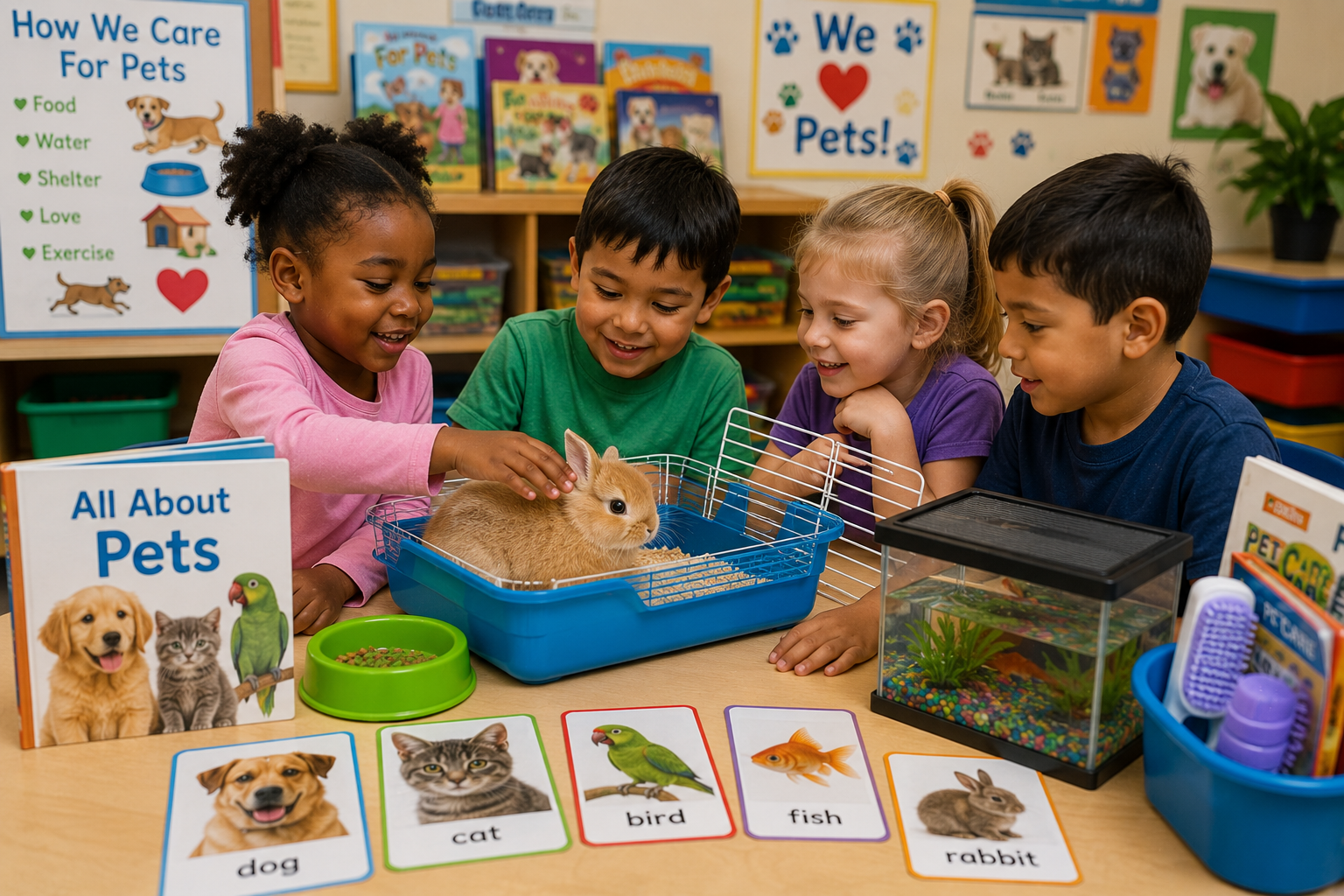
Encourage children to ask questions, observe carefully, and discover how people care for pets.
What animals can become pets? How are pets different from wild animals?
What do pets need to stay healthy, safe, happy, and loved?
Learn about veterinarians, groomers, trainers, animal shelters, and rescue organizations.
Compare size, habitats, food, sounds, movement, and unique characteristics of different pets.
Weeks
Activities
Interest Areas
Hands On Learning
Each week encourages children to ask questions, investigate living things, and develop compassion through meaningful experiences with pets.
What is a pet? Children identify different pets, compare animals, and discuss why families choose to have pets.
Learn how pets are cared for by exploring food, water, exercise, shelter, grooming, and daily routines.
Investigate veterinarians, animal hospitals, shelters, pet stores, and the people who help animals stay healthy.
Compare pets from around the world while celebrating responsible pet ownership and kindness toward all animals.
Children strengthen every area of development while investigating pets and learning to care for living things.
Describe animals, ask questions, compare pets, and communicate observations using new vocabulary.
Sort pets into groups, count paws, compare sizes, measure food, and recognize patterns.
Observe animal behaviors, investigate habitats, explore life cycles, and identify basic needs.
Develop empathy, responsibility, kindness, patience, and respect for living things.
Create pet portraits, habitats, puppets, masks, and imaginative animal artwork.
Learn how veterinarians, groomers, trainers, and shelters care for animals.
Introduce meaningful vocabulary naturally through books, conversations, observations, and dramatic play.
Pet, puppy, kitten, rabbit, hamster, bird, turtle, fish, guinea pig.
Shelter, habitat, food, water, exercise, collar, leash, bowl, litter box.
Veterinarian, clinic, healthy, examine, medicine, vaccine, checkup, grooming.
Fur, feathers, scales, paws, whiskers, tail, claws, beak, wings.
Invite families to help gather materials that encourage dramatic play, observation, and scientific investigation.
Dogs, cats, rabbits, birds, turtles, fish, farm animals, and other plush pets.
Bowls, collars, leashes, brushes, blankets, pet beds, toy food, and carriers.
Children's books, family pet photographs, magazines, calendars, and informational posters.
Bandages, clipboards, pretend stethoscopes, thermometers, scales, and doctor kits.
Encourage children to explore pets throughout every learning center using meaningful, hands on experiences.
Build pet homes, veterinary clinics, animal shelters, dog parks, aquariums, and pet stores using blocks and loose parts.
Transform the center into a veterinary clinic complete with stuffed animals, clipboards, pet carriers, bowls, collars, and examination tables.
Observe feathers, fur, shells, fish scales, bird nests, and animal photographs while comparing how pets look and move.
Read fiction and nonfiction books about caring for pets, animal habitats, veterinarians, and responsible pet ownership.
Paint pet portraits, make paper plate animals, create pet masks, design fish tanks, and build animal collages.
Create pet adoption certificates, veterinary reports, pet journals, labels, and observation drawings.
Explore pet food textures, feathers, smooth stones, natural materials, water beads, and animal figurines.
Move like puppies, kittens, rabbits, turtles, birds, fish, snakes, and other favorite classroom pets.
Develop vocabulary, communication, listening, and early reading skills while learning about pets.
Read books about dogs, cats, birds, fish, reptiles, rabbits, veterinarians, and animal shelters.
Encourage children to describe their favorite pets, compare animals, and explain how to care for them.
Draw observations of classroom visitors or family pets while dictating stories about their experiences.
Create classroom books using photographs of children's pets and dictated descriptions.
Children naturally explore mathematics and science while observing and comparing animals.
Sort animals by size, habitat, body covering, number of legs, or type of pet.
Observe how animals eat, drink, move, communicate, and respond to their surroundings.
Match pets to the environments and supplies they need to stay healthy and safe.
Compare fur, feathers, scales, paws, tails, ears, beaks, and other physical characteristics.
Walk, crawl, hop, slither, flap, swim, and stretch like different pets.
Sing songs about puppies, kittens, birds, fish, and caring for animals.
Create paw print paths that encourage balancing, hopping, crawling, and jumping.
Act like different pets while classmates guess which animal is being portrayed.
Take learning outdoors by observing animals, exploring habitats, and discovering how pets interact with the natural world.
Observe birds visiting feeders, identify colors, count species, and listen for different bird calls.
Look for nests, burrows, spider webs, insect homes, and other places where animals live.
Search for footprints in mud or sand and compare them with pictures of different animals.
Collect feathers, pinecones, sticks, and natural materials while discussing which animals might use them.
Invite families to continue learning about responsible pet care and kindness toward animals at home.
Bring photographs of family pets or favorite animals to share with classmates.
Help feed, brush, or play with a family pet while talking about its daily needs.
Read books about pets and discuss how people show kindness and responsibility.
Look for pets being walked, listen for animal sounds, and notice how owners care for them.
The Pets Study supports every developmental domain through meaningful investigations and caring relationships.
Children expand vocabulary while asking questions, describing observations, and sharing experiences.
Develop empathy, responsibility, cooperation, and respect for living things.
Observe animal behaviors, compare characteristics, make predictions, and solve problems.
Strengthen fine and gross motor skills through dramatic play, art, movement, and hands on exploration.
Observe children's understanding while they investigate, communicate, and care for animals.
Notice how children identify pets, describe characteristics, and explain animal needs.
Record children's conversations, questions, and stories during investigations.
Save drawings, observation journals, pet stories, and photographs of classroom experiences.
Compare children's thinking and vocabulary from the beginning and end of the study.
Allow children's curiosity about animals to guide classroom investigations.
Display photographs of family pets and local animals to encourage meaningful discussions.
Offer stuffed animals, loose parts, and dramatic play props that invite imaginative exploration.
Use everyday opportunities to demonstrate gentle handling, respect, and compassion toward living things.
Introduce children to the important work veterinarians do to keep animals healthy and safe.
Practice examining stuffed animals using pretend veterinary tools.
Discuss healthy food, clean water, exercise, grooming, and regular veterinary visits.
Create simple examination forms and observation sheets for pretend pets.
Transform dramatic play into a veterinary clinic where children care for sick and injured animals.
Quality literature encourages curiosity, empathy, responsibility, and meaningful conversations about caring for animals.
Read stories about loyal companions, responsible pet ownership, and caring for dogs.
Explore books about playful kittens, curious cats, and their unique personalities.
Discover fish, turtles, birds, rabbits, guinea pigs, and hamsters through engaging nonfiction books.
Introduce careers that help animals through books about veterinarians and animal rescue workers.
Help children understand that caring for a pet means providing love, food, shelter, safety, and attention every day.
Discuss healthy diets, fresh water, feeding schedules, and why different animals eat different foods.
Explore pet homes including aquariums, cages, kennels, hutches, terrariums, and cozy sleeping spaces.
Talk about brushing fur, trimming nails, bathing pets, and keeping animals clean and healthy.
Practice gentle touches, respectful behavior, patience, and compassionate care for every living thing.
Combine engineering, science, and creativity through hands on investigations.
Design homes for stuffed animals using blocks, recycled materials, cardboard, and loose parts.
Match pets with the environments and supplies they need to stay healthy and comfortable.
Design obstacle courses and play areas where toy pets can climb, jump, crawl, and explore.
Compare paws, claws, feathers, fur, scales, tails, and beaks while discussing how each helps animals survive.
Expand children's learning with related curriculum studies.
Discover wild animals, habitats, life cycles, and animal adaptations around the world.
Learn how plants provide food and shelter for many animals and insects.
Investigate the trees that provide homes for birds, squirrels, insects, and other wildlife.
Explore how clean water is essential for pets, wildlife, and all living things.