
Literacy
Storytelling Adventures
Children use books, pictures, props, and imagination to create stories and develop communication skills.
Language activities help children build vocabulary, express ideas, communicate with others, listen, tell stories, and develop early literacy skills through meaningful play experiences.
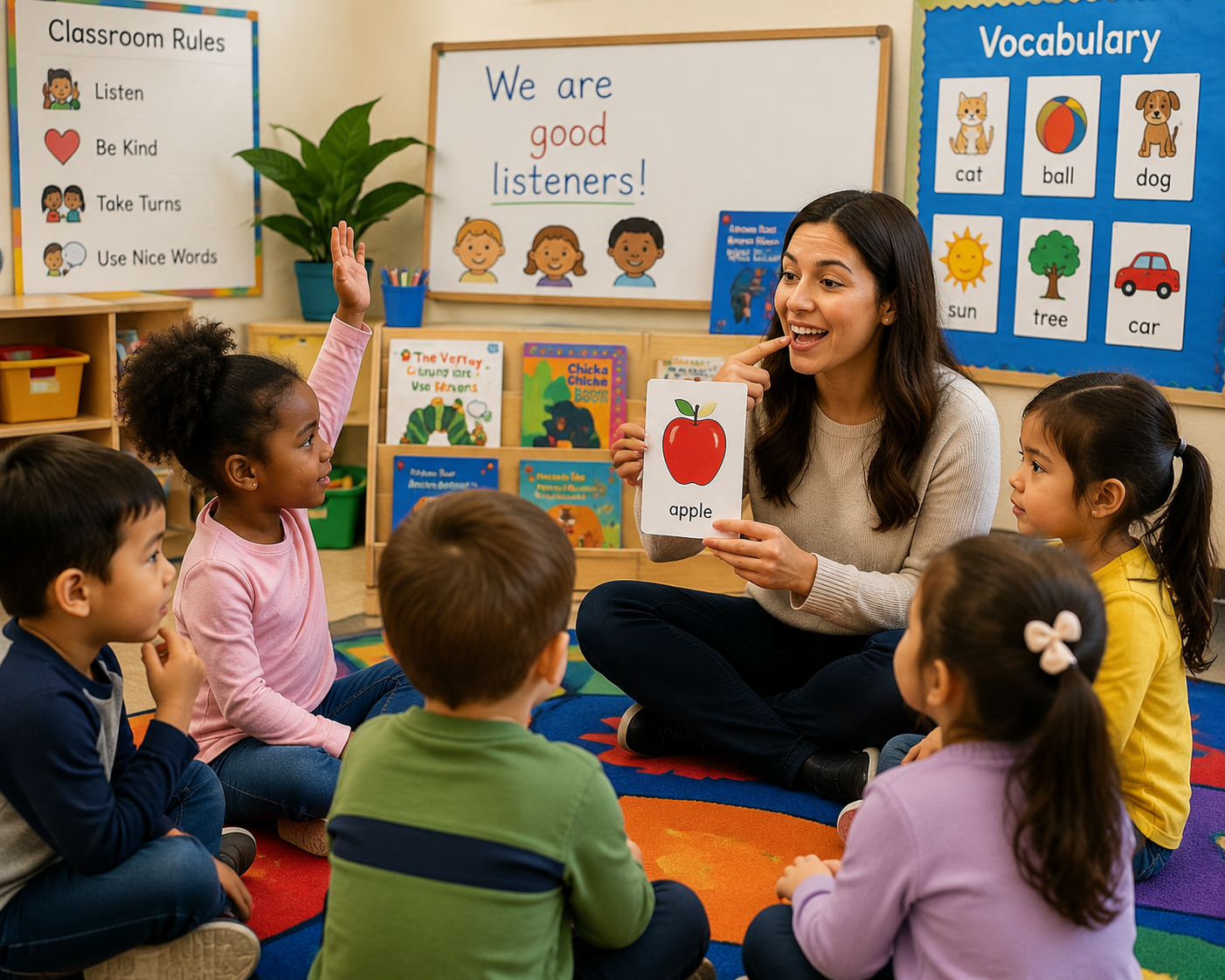
Children develop language skills through conversations, stories, songs, questions, and interactions with caring adults and friends. Every classroom moment can become an opportunity to build vocabulary and confidence.
Engaging experiences that help children communicate, listen, express ideas, and develop early literacy skills.
Children use books, pictures, props, and imagination to create stories and develop communication skills.

Children learn new words through conversations, objects, pictures, and classroom experiences.

Children strengthen listening skills, memory, rhythm, and language through music.

Children develop fine motor skills, letter awareness, drawing, and early writing habits.
Support children's communication and literacy development through play.
Stories, picture books, and shared reading experiences.
Building vocabulary through meaningful discussions.
Music experiences that strengthen language.
Pretend play that develops communication.
Drawing, letters, and early writing skills.
Following directions and understanding language.
Simple classroom experiences that build communication every day.
Children choose objects from a basket and create a story using imagination and descriptive words.
Children describe hidden objects using words about color, shape, size, and texture.
Children sing songs, identify rhyming words, and practice listening skills.
Children explore letters, symbols, and writing tools through meaningful experiences.
Every conversation, story, song, and play experience helps children become confident communicators.
Children learn to express ideas, share thoughts, ask questions, and communicate needs.
Children develop book awareness, storytelling skills, and understanding of print and letters.
Children practice paying attention, following directions, and understanding others.
Children strengthen fine motor skills, drawing abilities, and early writing behaviors.
Intentional interactions help children develop strong communication skills.
Use books to introduce vocabulary, ask questions, and encourage discussion.
Add details to children's sentences to model richer language.
Dramatic play creates opportunities for conversations and storytelling.
Allow children time to share ideas, opinions, and experiences.
Choose experiences that support children's developmental stages.
Babbling, gestures, songs, sounds, and early communication.
Explore →Vocabulary building, storytelling, songs, and conversations.
Explore →Questions, dramatic play, rhyming, and early writing.
Explore →Story creation, letter awareness, and communication.
Explore →Language activities support vocabulary, communication, listening, literacy knowledge, and children's ability to express themselves.