

Feelings
Understanding Emotions
Children identify feelings, express emotions, and learn healthy ways to respond to different situations.
Social emotional activities help children recognize emotions, build friendships, communicate feelings, develop confidence, and learn strategies for managing emotions in everyday situations.
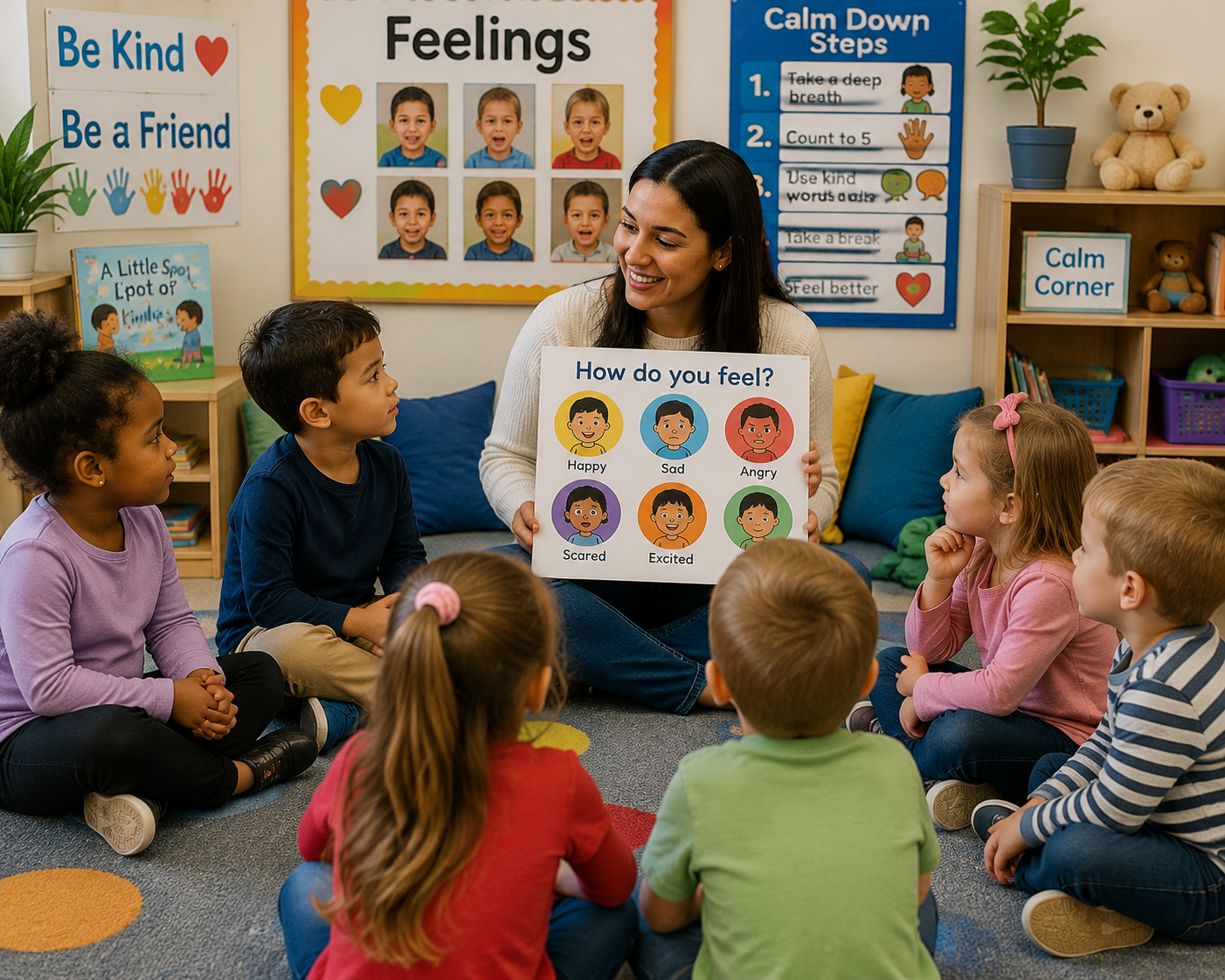
Young children develop social emotional skills through relationships, play, conversations, and daily classroom experiences. Supportive activities help children identify feelings, solve problems, cooperate with others, and build confidence.
Activities that help children understand feelings, build relationships, and develop confidence.
Children identify feelings, express emotions, and learn healthy ways to respond to different situations.

Children practice sharing, taking turns, kindness, and cooperation with friends.

Children learn breathing, coping strategies, and ways to manage emotions.

Children develop teamwork skills through group activities, problem solving, and collaboration.
Support children's emotional growth, relationships, and classroom community.
Help children identify, express, and understand emotions.
Practice kindness, sharing, and cooperation.
Teach strategies for managing big feelings.
Encourage independence, choices, and self-esteem.
Help children understand others' feelings.
Build belonging, respect, and teamwork.
Simple classroom experiences that support emotional development every day.
Children identify emotions using pictures, mirrors, and conversations about feelings.
Children practice kindness by helping, encouraging, and caring for classmates.
Children practice breathing, quiet reflection, and calming strategies.
Children work together to complete a classroom challenge while practicing cooperation.
Daily interactions and intentional activities help children build emotional awareness, confidence, and positive relationships.
Children learn to recognize feelings, express emotions, and understand how others may feel.
Children practice friendship, cooperation, sharing, and taking turns.
Children develop strategies for managing emotions, calming down, and making choices.
Children build independence, self-esteem, and confidence through successful experiences.
Create a classroom where children feel safe, valued, and connected.
Use everyday moments to help children name and discuss emotions.
Show children that their thoughts and feelings matter.
Help children work through conflicts and find solutions.
Recognize children's efforts, kindness, and progress.
Choose experiences that support children's emotional development.
Building trust, attachment, communication, and early emotions.
Explore →Naming feelings, sharing, friendship, and simple problem solving.
Explore →Cooperation, empathy, emotional expression, and independence.
Explore →Self regulation, leadership, teamwork, and confidence.
Explore →Social emotional activities support children's approaches to learning, emotional functioning, relationships, self regulation, and positive classroom experiences.