

Curiosity
Discovery Explorers
Children investigate materials, ask questions, observe changes, and discover how things work.
Approaches to learning activities encourage children to explore, try new ideas, solve problems, stay engaged, and develop confidence as they discover how they learn best.
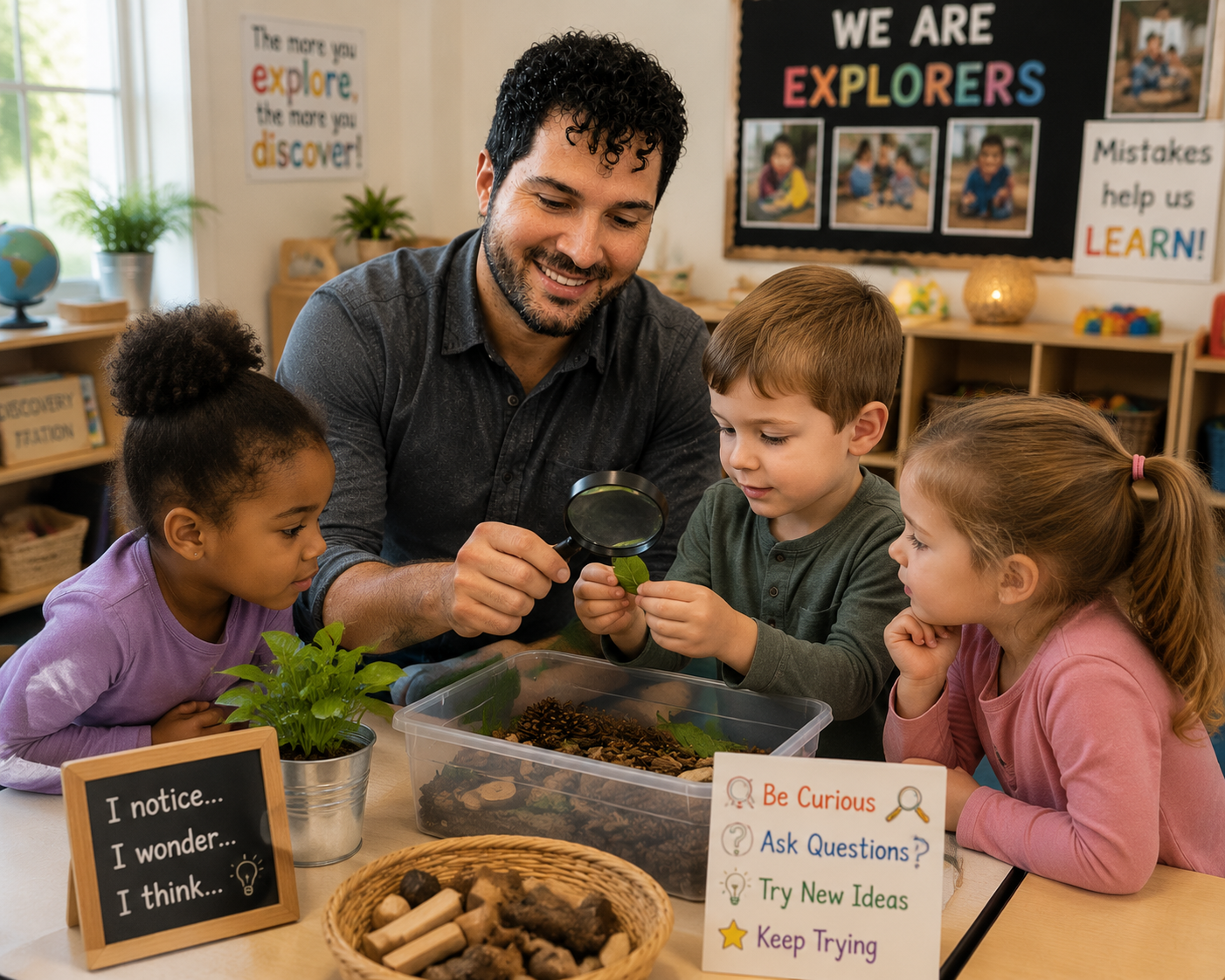
Children learn best when they are encouraged to explore, ask questions, make choices, and try new things. Approaches to learning activities help children develop curiosity, creativity, independence, and problem solving skills.
Activities that encourage children to explore, ask questions, solve problems, and become confident learners.
Children investigate materials, ask questions, observe changes, and discover how things work.

Children test ideas, try solutions, and learn that mistakes are part of learning.

Children practice patience, focus, and determination while working toward goals.

Children make choices, follow interests, and develop confidence in their own abilities.
Help children develop the skills and attitudes needed to become lifelong learners.
Encourage children to ask questions, investigate, and explore.
Help children keep trying when challenges appear.
Develop reasoning skills through challenges and discovery.
Support independence, choices, and leadership.
Encourage imagination and flexible thinking.
Build attention, focus, and participation.
Simple experiences that encourage children to think, explore, and take ownership of learning.
Children observe an object, ask questions, make predictions, and explore possible answers.
Children use blocks or materials to solve a design challenge.
Children practice patience while completing puzzles, games, or difficult tasks.
Children select activities, make decisions, and complete tasks independently.
Approaches to learning activities help children become engaged, confident, and independent learners.
Children ask questions, investigate ideas, and explore the world around them.
Children learn to continue trying, practice skills, and overcome challenges.
Children develop reasoning skills by testing ideas and finding solutions.
Children build confidence by making choices, taking responsibility, and leading learning.
Create a classroom environment where children feel confident to explore, question, and take risks.
Invite children to wonder, predict, and explain their thinking.
Provide activities that encourage children to think deeply and try new strategies.
Recognize persistence, creativity, and problem solving.
Give children opportunities to make decisions and follow interests.
Choose experiences that match children's developmental stages.
Exploration, curiosity, cause and effect, and early independence.
Explore →Simple choices, discovery activities, and problem solving.
Explore →Investigations, creative thinking, and persistence.
Explore →Leadership, independent learning, and complex problem solving.
Explore →Approaches to learning activities support curiosity, initiative, creativity, persistence, attention, and children's confidence as lifelong learners.